The Indus ReportThe Indus ReportThe Indus Report
Notification Show More
Font ResizerAa
  • Home
  • News
    • Pakistan
    • India
    • Middle East
    • America
    • Europe
  • Opinion
    • Analyses
    • Reviews
  • Economy and Business
    • Market Reports
    • Jobs
    • Inflation
    • Human Development Indicators
  • Tech
    • AI
    • ⁠Innovation
    • ⁠Industry
  • Lifestyle
    • Culture
    • Entertainment
    • ⁠Celebrity
  • Privacy Policy
  • About Us
  • Contact us
Font ResizerAa
The Indus ReportThe Indus Report
  • My Saves
  • My Interests
  • My Feed
  • History
Search
  • Home
  • News
    • Pakistan
    • India
    • Middle East
    • America
    • Europe
  • Opinion
    • Analyses
    • Reviews
  • Economy and Business
    • Market Reports
    • Jobs
    • Inflation
    • Human Development Indicators
  • Tech
    • AI
    • ⁠Innovation
    • ⁠Industry
  • Lifestyle
    • Culture
    • Entertainment
    • ⁠Celebrity
  • Privacy Policy
  • About Us
  • Contact us
Have an existing account? Sign In
Follow US
© 2026 THE INDUS REPORT Network. All Rights Reserved.

Home - Blog - Latest - Opinion - Analyses - The War Economy: Islamabad’s 14-Point Austerity Plan for Survival

AnalysesLatestNewsOpinion

The War Economy: Islamabad’s 14-Point Austerity Plan for Survival

TheIndusReport
Last updated: March 11, 2026 7:13 am
TheIndusReport
Share
The War Economy: Islamabad’s 14-Point Austerity Plan for Survival
SHARE

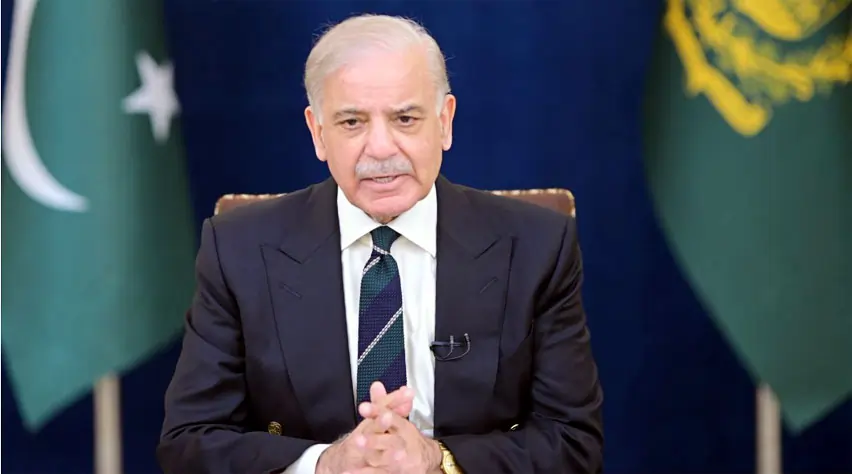
The geopolitical shockwaves from Operation Epic Fury and the U.S.-Israeli strikes on Iran that culminated in the martyrdom of the Supreme Leader on February 28, 2026, have fundamentally reordered the economic priorities globally. For Pakistan, Strait of Hormuz closure and the surge of Brent crude toward $120 per barrel have transformed a chronic fiscal deficit into an existential crisis. On March 9, 2026, Prime Minister Shehbaz Sharif presented a 14-point austerity plan, signalling the formal transition of the Pakistani state into a “war economy” posture.

The 14-point manifesto is an exercise in radical resource conservation. By implementing a four-day work week, transitioning 50% of the workforce to remote operations, and suspending physical schooling for two weeks. Islamabad aims to drastically reduce the nation’s energy footprint. The fiscal measures are equally severe: a 50% cut in official fuel quotas, the grounding of 60% of the government transport fleet, and a total surrender of salaries by the federal cabinet for two months.

While the symbolic gesture of Grade-20 officers donating two days’ salary to relief funds is politically astute, the actual efficiency of these measures remains questionable. While the plan targets administrative “fat” it does little to address the structural “bone” of Pakistan’s debt. The war economy reality is that Pakistan imports 40% of its energy, and no amount of cancelled Iftar parties or banned air conditioners can offset a $500 million monthly increase in the oil import bill if prices stay elevated. Moreover, the “London Blockade” has sent insurance premiums for Gulf-bound vessels into the stratosphere, meaning even the fuel the state can afford is becoming physically difficult to transport.

Ultimately, the 14-point plan is a necessary tactical retreat, but it is not a victory. It buys the government a narrow window of perhaps six to eight weeks to negotiate with the IMF and regional allies. However, as the regional conflagration intensifies and the US-Iran war accelerates, the true test will be whether the “middle road” mentioned by the PM can prevent a total collapse of the domestic supply chain. In a war that Pakistan did not start, the common man is once again the one being asked to pay the highest price for regional instability.


Share This Article
Email Copy Link Print
Previous Article UNSC Debate on Pakistan’s Afghanistan Strikes: Operation Ghazab Lil Haq and the Right to Self-Defense Under Article 51 UNSC Debate on Pakistan’s Afghanistan Strikes: Operation Ghazab Lil Haq and the Right to Self-Defense Under Article 51
Next Article Water vs. War: The Invisible Threat to the Gulf’s Lifeblood Water vs. War: The Invisible Threat to the Gulf’s Lifeblood
Leave a Comment

Leave a Reply Cancel reply

Your email address will not be published. Required fields are marked *

Your Trusted Source for Accurate and Timely Updates!

Our commitment to accuracy, impartiality, and delivering breaking news as it happens has earned us the trust of a vast audience. Stay ahead with real-time updates on the latest events, trends.
FacebookLike
XFollow
InstagramFollow

You Might Also Like

Erasing Half the Reality: A Historical Rebuttal to the Singular Narrative of 1971
LatestAnalyses

Erasing Half the Reality: A Historical Rebuttal to the Singular Narrative of 1971

By
TheIndusReport
Justice Vindicated: The Final Verdict in the Ali Zafar vs. Meesha Shafi Case
⁠Celebrity

Justice Vindicated: The Final Verdict in the Ali Zafar vs. Meesha Shafi Case

By
TheIndusReport
Why India’s Chabahar Port Funding Pause Sparks Strategic Debate and How Iran Has Responded
NewsIndia

Why India’s Chabahar Port Funding Pause Sparks Strategic Debate and How Iran Has Responded

By
TheIndusReport
Priyanka Chopra and the Perils of Selective Peace
Entertainment

Priyanka Chopra and the Perils of Selective Peace

By
TheIndusReport
The Indus Report
Facebook Twitter Instagram

The Indus Report delivers global news, entertainment, viral trends, and fashion updates with accuracy, clarity, and a modern digital perspective.

Top Categories
  • Economy and Business
  • Lifestyle
  • News
  • Opinion
  • Tech
Support & Terms
  • About Us
  • Contact us
  • Privacy Policy
  • Terms and Conditions
  • Editorial Policy
  • Write For Us

©2026 THE INDUS REPORT Network. All Rights Reserved.

2026 The Indus Report Network. All Rights Reserved.
Welcome Back!

Sign in to your account

Username or Email Address
Password

Lost your password?