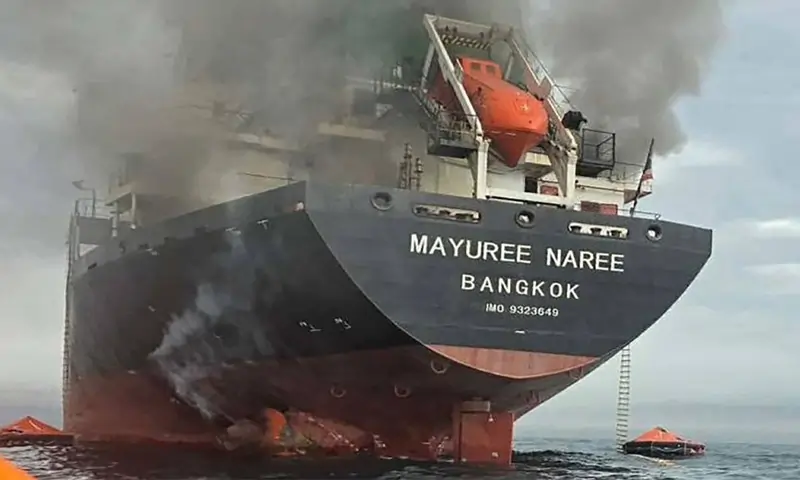
The recent attack on the Mayuree Naree, a bulk carrier bound for India’s Kandla Port, marks a perilous escalation in the ongoing regional conflagration. Struck by projectiles on March 11, 2026, while transiting the volatile waters near the Musandam Peninsula, the vessel was engulfed in flames, forcing a mid-sea evacuation. This is not a random strike, but a definitive signal from Tehran; the “guarantee of safe passage” for neutral powers is officially dead.
The core of the tension lies in the fallout from the IRIS Dena tragedy. On March 4, the Iranian frigate was sunk by a U.S. torpedo off the coast of Sri Lanka shortly after participating in India’s MILAN naval exercises. Tehran perceives India’s visible diplomatic support for Israel and the alleged sharing of maritime domain intelligence sharing as a betrayal of trust. For the new Iranian leadership, New Delhi is no longer a neutral mediator but a “silent partner” in the Western coalition, making India bound cargo a primary target for retaliation.
This attack places India in a mechanical dilemma. Despite high level diplomatic channels, the reality on the water contradicts official assurances. The primary obstacle is now the “London Blockade.” As insurance premiums for Gulf bound vessels enter the stratosphere, neutral shipping is becoming financially unviable. Even if a ship isn’t hit, the cost of protecting it is beginning to outweigh the value of the cargo, threatening a total freeze of India’s energy supply chain.
Beyond shipping disruptions, the conflict is also creating secondary humanitarian risks for the wider Gulf region. Damage to oil infrastructure and large-scale refinery fires can trigger severe environmental consequences that threaten desalination systems and regional water security, a risk explored in “Water vs. War: The Invisible Threat to the Gulf’s Lifeblood”. Together, these developments reveal how military escalation in the Gulf can quickly evolve into a broader crisis affecting both energy and water lifelines.
The US-Iran war has created a fragmented command structure where local naval units act with increasing autonomy. In response, the Indian Navy is now facing the unavoidable necessity of initiating Operation Sankalp-2. This updated mandate involves the deployment of guided missile destroyers to provide direct and armed escorts for merchant convoys.
However, this move is fraught with risk. By entering the Strait with a “clear decks” combat posture, the Indian Navy risks a direct kinetic engagement with Iranian “suicide” boats and mine layers. This transition represents the end of India’s neutral buffer; it is a forced entry into a war zone where “freedom of navigation” must now be defended by force of arms.