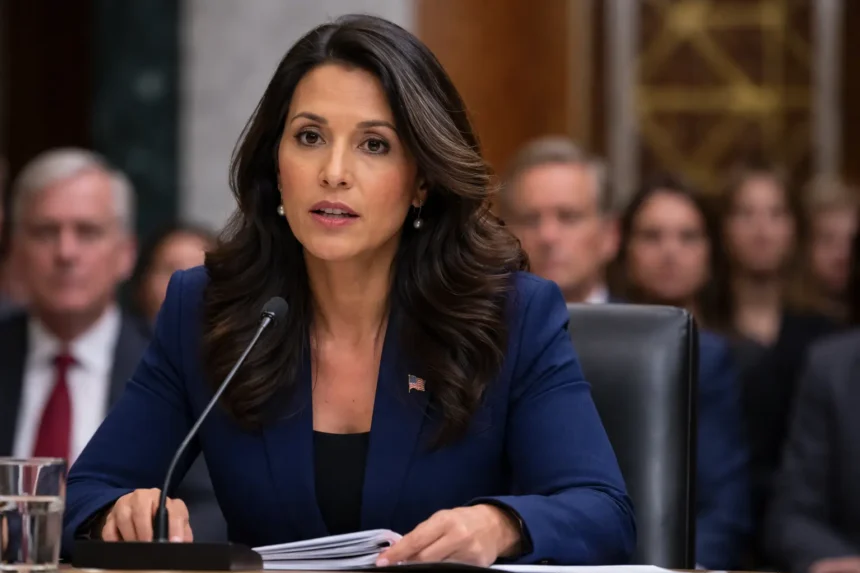
When Tulsi Gabbard takes the podium to broadcast “intelligence led” warnings, the rhetoric is razor sharp but the substance is fatally flawed. In her March 18, 2026, testimony before the Senate Intelligence Committee, Gabbard explicitly grouped Pakistan with Russia, China, and North Korea, characterizing them as a collective nuclear and missile threat to the U.S. homeland. These widely circulated claims have been dismissed by veteran regional analysts not as a credible security assessment, but as a calculated masterpiece of geopolitical theatre. Far from being rooted in actual threat data, critics argue these assertions are a “manufactured crisis”, meticulously crafted to serve a long standing pattern of advocacy for Indian ethno-nationalist interests within the American power structure.
Gabbard’s political trajectory reveals a consistent, deep rooted alignment with the Rashtriya Swayamsevak Sangh (RSS) ecosystem and the ruling Bharatiya Janata Party (BJP). Her ascent has been meticulously fuelled by a network of donors tied to the “Overseas Friends of the BJP.” Often dubbed the “American Handmaiden” of the RSS, Gabbard has functioned as a primary conduit for Hindutva ideology in Washington, from her vocal defense of Narendra Modi during his diplomatic isolation to her high-profile presence at Sangh Parivar events. This institutionalized link suggests that her anti Pakistan rhetoric; and her effort to bucket Islamabad alongside global adversaries like Moscow and Beijing is not an American security concern, but the strategic output of a sophisticated Indian lobby working to weaponize U.S. foreign policy.
The response from Islamabad has been clinical and definitive. A spokesperson for the Ministry of Foreign Affairs (MoFA) issued a high level rebuttal, categorizing Gabbard’s claims as “utterly baseless and unsupported by any credible evidence.” In an official statement, the Ministry labelled the narrative a “crude fabrication of reality” designed to mislead the international community and malign Pakistan’s verifiable counter terrorism successes. The MoFA further warned global figures against becoming “paid mouthpieces for partisan lobbies” that seek to destabilize regional peace and distract from the ongoing humanitarian crises in Indian occupied territories.