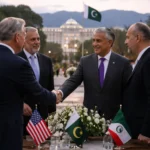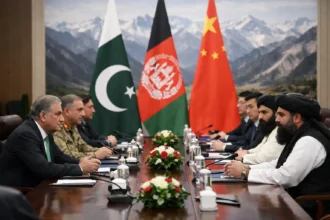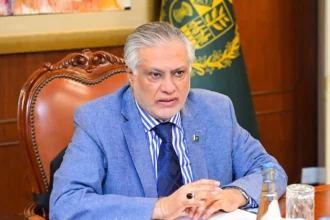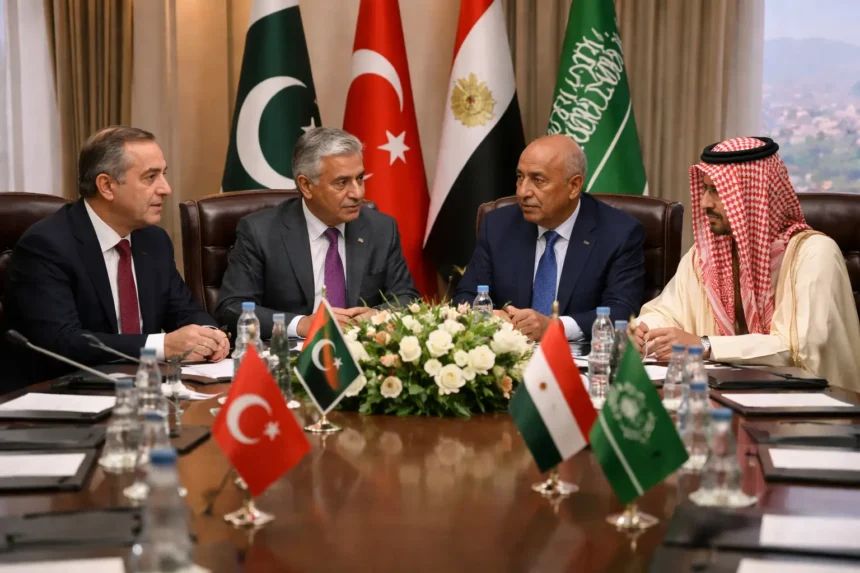
As the sun sets over the Margalla Hills this Sunday, March 29, 2026, the global diplomatic compass has calibrated decisively towards Pakistan. In a high stakes “Quadrilateral Summit” that many are calling the most significant peace initiative of the decade, Deputy Prime Minister and Foreign Minister Senator Mohammad Ishaq Dar is hosting a powerhouse assembly of his counterparts; Hakan Fidan of Türkiye, Dr. Badr Abdelatty of Egypt, and Prince Faisal bin Farhan Al Saud of Saudi Arabia. The mission is as clear as it is daunting “To pull the United States and Iran back from the precipice of a full scale regional war.”
Carefully assessing the global and regional repercussions and capitalising on its diplomatic leverage, Pakistan has transitioned from a silent observer to a proactive “pendulum mediator”. This summit is not merely a meeting; it is the formalization of the Rawalpindi Mechanism, a diplomatic track that began on the sidelines of the Riyadh summit earlier this month.
This “Quad of Moderation” while capitalising on the expertise of its architects, is expected toact as a strategic bridge, relaying de-confliction measures to Washington while preserving Tehran’s sovereignty. Simultaneously, formulating pragmatic steps to secure maritime corridors and stabilize global supply chains threatened by the blockade. Consequently, prioritising actionable steps such as proxy restraint and enrichment monitoring while positioning Pakistan as the “Anchor host” where the U.S. 15 points proposal and Iran’s counter plan can finally be reconciled.
Despite Tehran’s public posturing and initial dismissal of the U.S. 15 Points Peace Plan as “Maximalist”, the framework remains the heartbeat of the Rawalpindi summit. Far from a dead end, the plan which covers sanctions relief in exchange for nuclear and missile rollbacks has successfully forced a formal 5 points counter proposal from Iran. Strategic arbitration ofIslamabad where these two conflicting documents are being meticulously reconciled, is expected to placate the outcome of this emerging conflict. With the support of the Quad, Pakistan is transforming a public rejection into a private, structured dialogue, reiterating that even a “narrow de-escalation window” is sufficient for disciplined diplomacy to thrive.
The international community must acknowledge the sincere diplomatic efforts being made by the Pakistani leadership. While Islamabad faces its own challenges on the Afghan border, its ability to convene this “Quad of Moderation” underscores that Pakistan may become an indispensable bridge between the East and the West, and remains a proponent of promoting global peace. As Deputy Prime Minister and Foreign Minister Ishaq Dar aptly noted during the opening session, “Dialogue and diplomacy remain the only viable path. We are not just seeking a ceasefire; we are building a pathway to a lasting peace that the region so desperately deserves.”