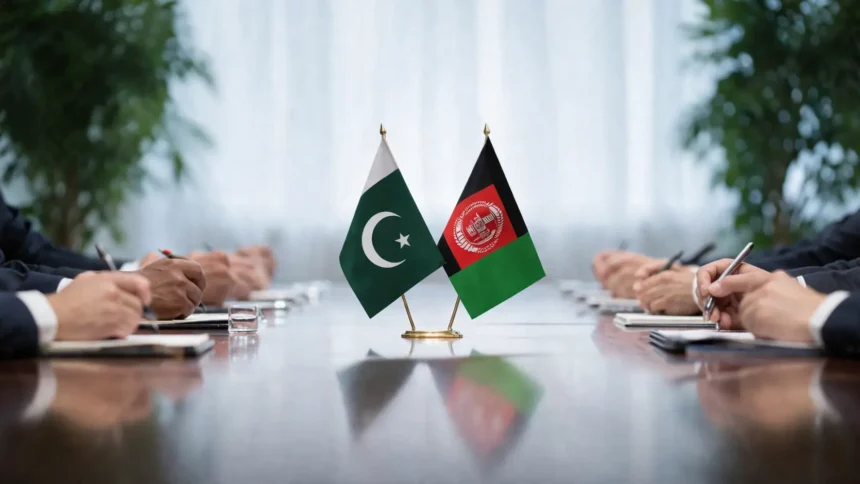
In a decisive diplomatic manoeuvre to secure a conflict resolution, Pakistan has laid down a comprehensive three point mandate during the high level security huddle in Urumqi. This isn’t just another round of border talks; it is a clear projection of Pakistan’s national interest, aimed at securing our frontiers and ensuring that regional economic projects remain shielded from the shadow of terror. Building on the April 1st sessions, Islamabad has now shifted the burden of proof to Kabul by demanding a Joint Verification Framework to monitor border hideouts. The message is explicit and unwavering. The Pakistan security forces will continue the retaliatory Operation Ghazab-Lil-Haq, aimed at dismantling the terror hubs inside Afghan territory till the agreement is sought to deny much needed “regroup leverage” to the perpetrators.
1. Official Recognition and Dismantling of TTP
Pakistan’s primary demand is the immediate, formal declaration of the TTP as a terrorist organization by Kabul. Pakistan has provided the evidence; now action is required. The dismantling of this infrastructure is a non negotiable prerequisite for peace. As highlighted in The Wall Street Journal’s report on“The High Stakes of South Asian Security,” a stable Pakistan remains the only bulwark against a wider regional contagion.
2. Verifiable Proof of Action
The second demand focuses on “visible and verifiable” action. Islamabad is no longer moved by mere rhetoric. It requires concrete results on the ground to monitor the Durand Line. By institutionalizing real-time intelligence sharing, the aim is to prevent the “false flag” operations often staged to malign state institutions. This echoes the strategic necessity outlined in Foreign Affairs’ critique of“The New Era of Border Diplomacy,” where transparency is the only currency that matters.
3. A Security-First Economic Framework
Finally, Pakistan has made it clear that the fruits of regional connectivity cannot be shared with those who harbor its saboteurs. While the dialogue encourages confidence building measures like the reopening of trade routes, Pakistan maintains that economic integration is a privilege of peaceful neighbours.
Pakistan stands at the vanguard of the fight against regional instability while Afghanistan seems reluctant to document its assurances. The Urumqi dialogue aims to provide a mediating forum to attain the blueprints for a peaceful, prosperous, and a stable region. A ray of hope seems evident and the ball is now firmly dragged in the court of Afghanistan to seek bilateral agreement to pave way for a harmonious region.