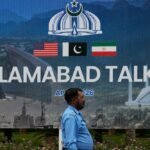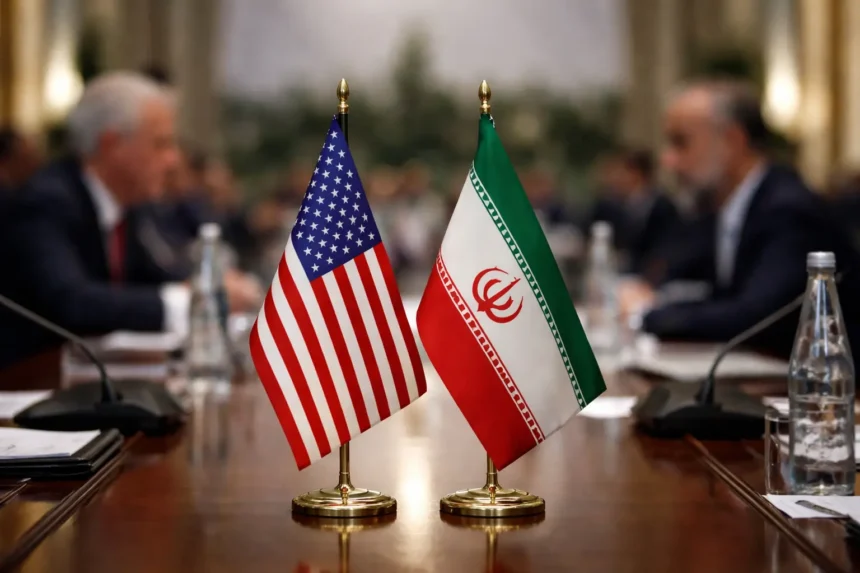
The historical Islamabad Talks, which saw 21 hours of negotiations between the United States and Iran, have concluded without a formal agreement early Sunday morning. Yet, as the dust settles in the Pakistani capital, the world finds itself in a precarious state of “negative peace”. While the immediate threat has been deferred, the conclusion of formal talks leaves the existing two week ceasefire in a fragile and exposed state.
The conclusion of the talks was marked by a sharp divergence in narratives. US Vice President JD Vance framed the deadlock as an Iranian failure: “We have not reached an agreement, and I think that’s bad news for Iran much more than it’s bad news for the United States of America,” he said, elaborating that Iran had chosen “not to accept our terms.”
“We need to see an affirmative commitment that they will not seek a nuclear weapon and they will not seek the tools that would enable them to quickly achieve a nuclear weapon,” Vance added. Shortly after, he flew back to the US.
Conversely, Iran’s Parliament Speaker Mohammad Bagher Ghalibaf argued that the onus of progress now rests entirely on Washington. He noted that while Iran offered “forward-looking” initiatives, the US failed to win their trust during the negotiations.
“The US has understood Iran’s logic and principles, and it’s time for them to decide whether they can earn our trust or not,” he wrote in a post on X.
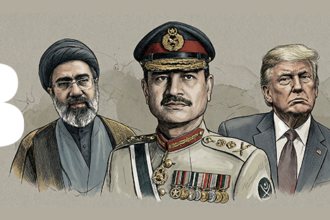
While diplomats navigated the halls of Islamabad, President Donald Trump utilized the digital media platforms to reassert a doctrine of “Maximum Pressure”. In a characteristically blunt assessment, Trump claimed he could “take out Iran in one day” and cripple their entire energy infrastructure.
The announcement of a naval blockade on the Strait of Hormuz represents a significant escalation in rhetoric. By threatening to halt the flow of Iranian oil, which has continued to move despite the recent conflict; Trump is attempting to squeeze Tehran’s primary economic artery. However, as geopolitical experts note, Iran has already gained a “40 day head start” in oil shipments, providing them with a temporary fiscal cushion that may allow them to withstand a short term blockade.
Despite the public “bad news,” the end of formal talks might not signify the end of diplomacy. As noted by Zahid Hussain and other experts, the focus is likely to shift toward backchannel negotiations and remote diplomacy.
The ceasefire is currently holding not because of a political consensus, but due to a mutual “cautious pause.” Trita Parsi highlighted that neither side has explicitly rejected the possibility of future rounds, suggesting that the Islamabad exit might have been a tactical move to avoid appearing weak. Parsi noted that while no deal was reached, there remains a shared interest in avoiding a return to full-scale war.
The situation in the Strait of Hormuz remains the ultimate flashpoint. Vali Nasr has questioned whether the US blockade is a prelude to a new round of negotiations or a genuine military pivot. He suggests this is now a “test of endurance” between the two nations, where Iran might respond by exerting pressure on shipping in the Red Sea.
The international community, including regional players like Israel, remains on high alert. With Israel intensifying bombardment in Lebanon, the risk of a “peripheral trigger” shattering the US-Iran truce is at an all-time high. Sky News analysis further confirms that while the talks have “collapsed” in the formal sense, the “what’s next” remains a battle of leverage.
Ultimately, the “Islamabad round” was a foundational opening of a complex diplomatic journey since diplomacy is not an event rather a process. After 47 years of severed ties these talks provided the essential neutral ground required for both nations to tread their future course cautiously. This was the start of a long-overdue dialogue, serving as a critical icebreaker furthering way for ultimate achievement of regional peace and stability.