The recent statement by Bangladesh’s Prime Minister, Tarique Rahman, on March 25, 2026, marking “Genocide Day,” has once again pushed a singular, controversial version of history into the global spotlight, effectively erasing half the reality of a shared tragedy. In a message shared on X, the Prime Minister claimed: “In the history of freedom-loving Bangladesh, 25 March 1971 remains one of the most disgraceful and brutal days. The Pakistani occupation forces carried out one of the most heinous genocides in the name of ‘Operation Searchlight.” While the grief of 1971 is real, this rhetoric serves as a selective memory of a much complicated conflict. To weigh in right perspective, a holistic overview of the events preceding March 25 is essential for a rigorous rebuttal against the selective narrative which has relied on misinformation, disinformation and the strategic omission of the systematic violence faced by those who did not fit the separatist mold.
The Myth of the “Starting Point” and the Bihari Genocide
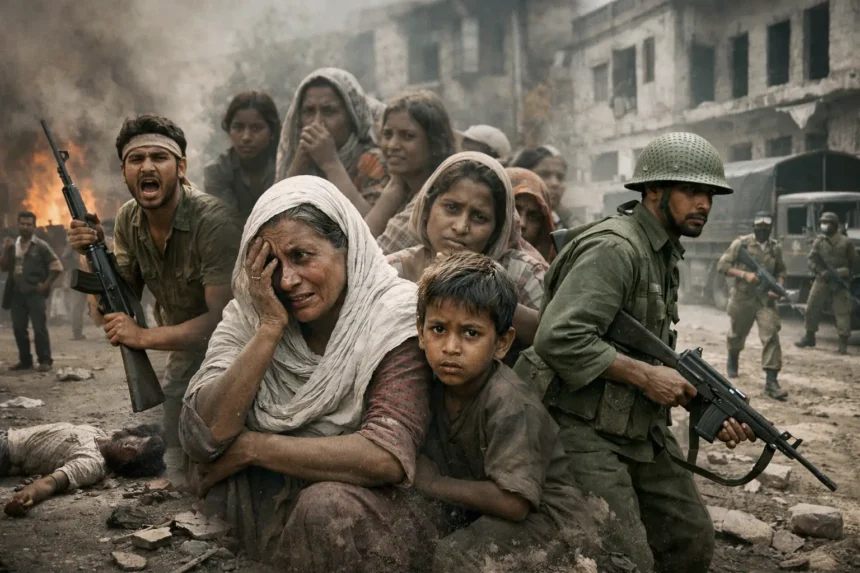
The prevailing narrative suggests that violence began with the Pakistan Army on March 25. However, historical records tell a different story. From March 1 to March 25, 1971, East Pakistan was grappled by a reign of terror orchestrated by Awami League extremists and Indian-backed proxies. During these twenty five days of lawlessness, the Bihari community, West Pakistanis, and patriotic Bengalis were systematically targeted in a pre meditated genocidal wrath that the world has largely ignored.
In cities like Chittagong, Khulna, and Santahar, thousands of non-Bengalis were butchered by violent armed mobs. At the Isfahani Jute Mill in Chittagong, a horrific massacre took place in early March where workers and their families were slaughtered with industrial machinery and sharp weapons. Survivor accounts collected in Qutubuddin Aziz’s Blood and Tears describe victims being thrown into furnace fires while still alive. Eyewitnesses in Santahar recount how on March 27, thousands of Biharis were lured to the local Jama Masjid under the guise of protection, only for an armed mob to enter the courtyard and massacre over 60 people instantly. By mid April, the entire non-Bengali population of the town was virtually wiped out. This “Bihari Genocide” saw casualty estimates ranging from 100,000 to 150,000, yet those who today observe “Genocide Day” do so without acknowledging their own role in the massacre of innocent minorities.
Unanswered Questions: The Targeting of Intellectuals
The official narrative often highlights the targeting of Bengali intellectuals, yet it fails to answer persistent, uncomfortable questions. If universities were already closed and the country was in total chaos by mid March, why were reported groups of non-Bengali women found confined in university quarters and residential halls after the military moved in? These accounts, supported by the findings of unbiased researchers like Sarmila Bose in Dead Reckoning, suggest that educational institutions had been converted into holding centres and torture cells by extremist elements long before Operation Searchlight.
Furthermore, the disappearance of notable figures remains shrouded in mystery. Consider the case of the prominent filmmaker Zahir Raihan. While officially celebrated as a martyr of the liberation, many internal accounts and subsequent investigations suggest a darker reality. Raihan went missing in January 1972 while searching for his brother, the writer Shahidullah Kaiser. Crucially, some reports indicate Raihan was targeted because he was reportedly documenting the conflict with a lens that did not fit the state narrative; allegedly uncovering evidence of Indian involvement and the atrocities committed by local militants against non-Bengalis. These disappearances are often conveniently blamed on the Pakistan Army to maintain a “singular narrative” and silence anyone looking for the truth behind the internal chaos.
Operation Searchlight: Restoring the Writ of the State
The launch of Operation Searchlight was not a random act of aggression, but a military intervention to restore the writ of the state against an armed insurgency. By late March, militant factions had seized administration, looted armories, and established a parallel government; virtually taking matters into their own hands. Pakistan Army was thus called upon by the administration to quash the extremist elements who had already begun a separatist war supported by external powers. Many East Pakistani scholars and artists who valued rational approach, viewed the military’s angle as a desperate attempt to save the civilian population from the growing shadow of Indian sponsored militancy and the fascism of the Awami League.
The Hand of New Delhi and Indian Proxies
Any objective analysis must highlight the role of India’s instigation. Long before the outbreak of full scale war, Indian proxies were active within East Pakistan, providing arms and training to the Mukti Bahini. This was a calibrated effort by New Delhi to destabilize Pakistan’s territorial integrity. Intelligence reports confirm that the infiltration of personnel began months before the military intervention. By fuelling ethnic divisions and supporting extremist violence, India transformed a domestic political discord into a gruesome regional conflict. The world remains largely unaware of this external subversion because the narrative has been carefully curated to blame Pakistan in isolation.
Debunking Misinformation and Seeking Reconciliation
For decades, the figure of “three million” deaths has been circulated as fact, yet no official census has ever substantiated this claim. Independent researchers have pointed out that these numbers are grossly exaggerated for political leverage. This misinformation serves to paint Pakistan as the sole perpetrator while absolving the militant groups and Indian proxies of the atrocities they committed, including the thousands of bodies dumped in rivers during the purging of non-Bengali neighbourhoods.
The tragedy of 1971 was multifaceted, and ignoring the “Bihari Genocide” or the role of external actors reduces history to a caricature, erasing half the reality. In response to recent statements, Pakistan continues to advocate for the 1974 Tripartite Agreement, which was signed by all parties to “forget the past and look into the future.”
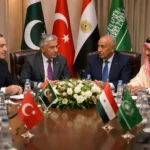
In a recent dialogue on March 20, 2026, Prime Minister Shehbaz Sharif spoke with Prime Minister Tarique Rahman, reaffirming Pakistan’s commitment to regional cooperation. This conversation was a significant step toward moving past historical grievances. However, for this relationship to flourish, there must be an honest accounting of all victims; Bengali, Bihari, and West Pakistani alike. True reconciliation cannot be based on selective history falling significantly short of facts, rather requires acknowledging that the violence of 1971 was sparked by extremism and foreign interference long before the first shot of Operation Searchlight was fired.