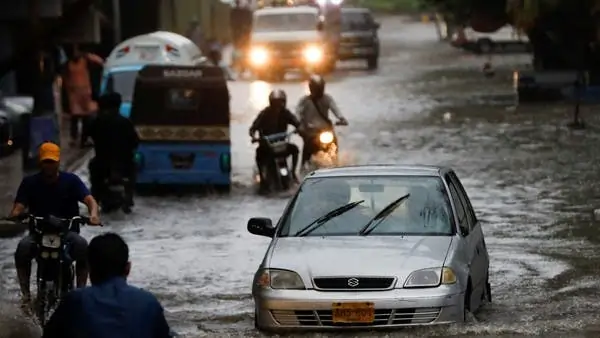
Karachi, Pakistan’s sprawling economic hub, was thrust into a state of emergency on Thursday, April 2, 2026, as an unseasonal and intense westerly wave triggered widespread downpour. The sudden rainfall, which intensified shortly after 2:00 PM, has once again exposed the fragile climate resilience of the metropolis.
The Pakistan Meteorological Department (PMD) reported significant rainfall across the city, with the highest accumulations in Keamari and Surjani Town. According to The Express Tribune, the “rain emergency” was officially declared by Karachi Commissioner Syed Hassan Naqvi following a hailstorm in Mauripur and heavy falls that choked arterial roads such as
I.I. Chundrigar and Shahrah-e-Faisal. This climate anomaly occurring during a month typically characterized by rising temperatures forced the closure of major markets and left commuters stranded for hours as vehicles succumbed to inundated streets.
The deluge triggered a polycrisis for residents. Over 60% of the city faced power outages as K-Electric pre-emptively suspended supply to over 200 feeders to prevent electrocution risks. While Mayor Murtaza Wahab assured the public that the Karachi Metropolitan Corporation (KMC) had deployed rapid response teams to 12 critical choking points, the volume of water quickly overwhelmed a drainage system designed for far lower thresholds. As previously highlighted that Karachi’s recurrent flooding is a “stark reminder” of the global climate crisis hitting vulnerable urban centres.
The Sindh government has cancelled the leaves of all essential staff and activated a 24 hour monitoring cell. As reported by Dawn, de-watering pumps have been prioritized for low lying districts, yet the “butterfly effect” of traffic chaos continues to hinder rescue operations. With more intermittent rain forecast through April 4, the focus remains on preventing loss of life and securing weak structures against projected windstorms.
For a city that serves as the backbone of Pakistan’s trade, this April emergency is more than a weather event; it is a critical test of urban governance in an era of unpredictable climate shifts.