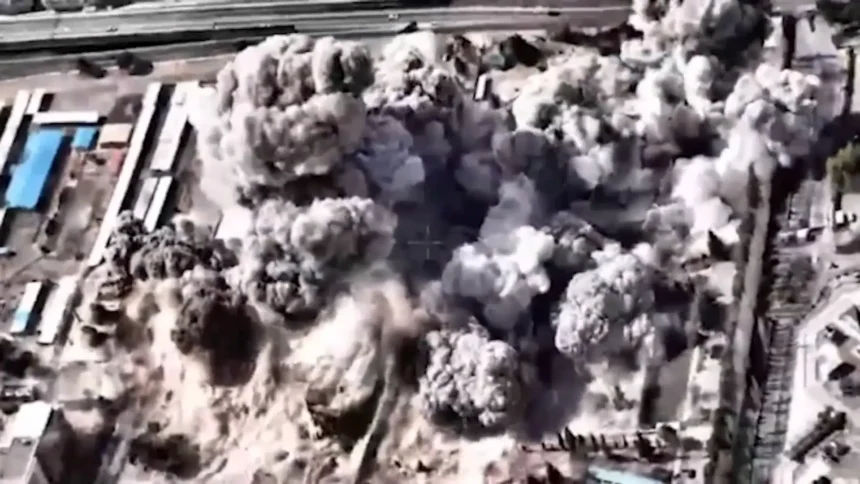
As the fires from the February 28 strikes continue to burn across Tehran and Isfahan, the Pentagon has been quick to label Operation Epic Fury a “masterclass in precision.” With the assassination of Supreme Leader Ali Khamenei within the opening hours, the Trump administration is claiming a victory lap. But the truth is far from what is being portrayed; the “epic” nature of this operation looks less like a triumph and more like the beginning of a strategic miscalculation.
Washington’s strategy was built on the “Decapitation Fallacy”; the belief that by removing the head of the Islamic Republic, the body would collapse into a pro-Western democratic uprising. The appointment of Mojtaba Khamenei as the new Supreme Leader on March 8 signals that the Iranian establishment has not fractured; it has hardened. Rather than a popular revolt, the strikes have triggered a nationalist rally around the flag, fuelled by the famous slogans of
“Long Live the Martyred Supreme Leader”.
The efficacy of the strikes is being rapidly offset by the “asymmetric math” of regional warfare. While the U.S. spent an estimated $5.82 billion in the first 100 hours, Iran’s retaliatory strikes have hit the heart of American regional presence. The destruction of the $1.1 billion radar system at Al-Udeid in Qatar and the strikes on the Fifth Fleet HQ in Bahrain are a testament to “contained” war being a myth. At the same time, the wider conflict has triggered devastating humanitarian consequences, including civilian casualties and large-scale infrastructure destruction across Iran, as detailed in Israel’s Assault on Humanity.
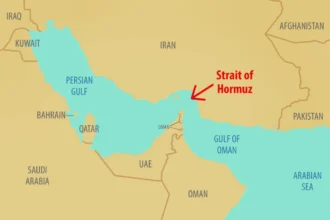
The U.S. has started a war it cannot “win”. You can raze a missile factory, but you cannot bomb the geography of the Strait of Hormuz or the staunch ideology of the Iranian populace into submission. With the Strait now effectively closed and oil prices swinging violently, the global economy is being held hostage by a conflict that has no “Day After” plan. By seeking “Peace through Strength,” Washington has instead unleashed a “Fury” that it can neither control nor afford.
It is increasingly evident that the U.S. administration, in a bid to appease the powerful Israeli lobby, has ignited an entirely unnecessary war that serves narrow interests over global stability. This is not 2003; today’s Middle East is far less tolerant of Western Regime-Change experiments. If the current trajectory holds, Operation Epic Fury will be remembered not for its tactical precision, but as a historic “Epic Disaster”; a reckless conflagration spiralled by domestic political pressures rather than genuine security needs.