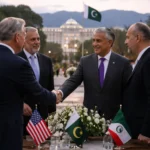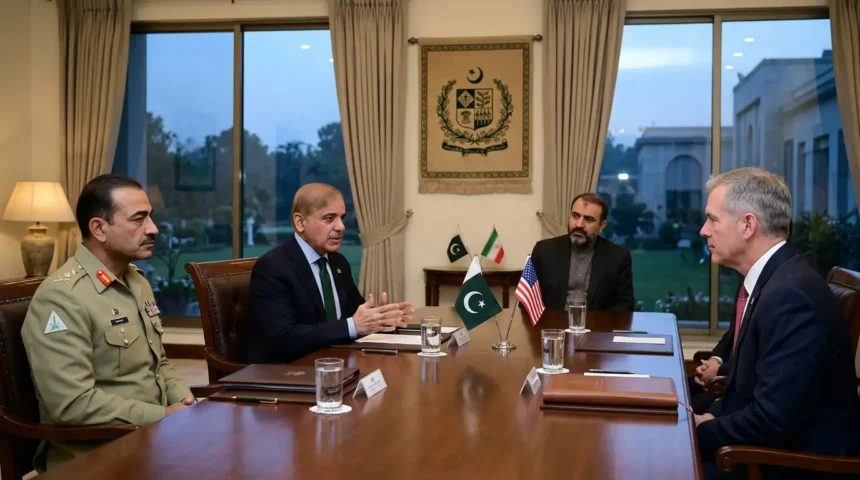
As the military confrontation between the United States, Israel, and Iran enters a critical phase in March 2026, surprising diplomatic parleys are set to take place in Islamabad. Following the geopolitical quagmire of Ayatollah Ali Khamenei’s death in February, Pakistan is rapidly positioning itself as the primary mediator capable of averting a full scale procrastinated regional war with global repercussions.
While traditional intermediaries like Qatar and Oman remain active, Pakistan’s unique leverage comes from its rare diverse accessibility. Islamabad maintains deep rooted security ties with Washington, ethno-cultural ties with Tehran while preserving strategic alliances with Gulf Countries.
This month, Prime Minister Shehbaz Sharif and Chief of Army Staff, Chief of Defence Forces Field Marshal Syed Asim Munir have intensified back-channel efforts. The rapport between the Pakistani military leadership and the White House has become a focal point of this diplomatic manoeuvre. On March 5, 2026, during a peace summit in Egypt, President Donald Trump publicly signalled this trust, stating “Prime Minister Sharif is here, and I have to say my favourite Field Marshal from Pakistan (Asim Munir) is a great fighter, he really is. He’s a great guy, too.” Trump later doubled down on Truth Social, sharing a screenshot of Sharif’s offer to host talks and adding “Pakistan is doing a great job. Very productive talks happening. We are going to stop the wars!”
The rationale for Pakistan’s involvement is driven by a mix of strategic necessity and domestic urgency. Geopolitically, Pakistan offers a neutral venue that avoids the “political baggage” of Arab Gulf states currently entangled in regional defense pacts. Economically, the conflict has pushed Brent crude toward $120 per barrel, skyrocketing fuel prices in Pakistan and threatening its fragile IMF-backed recovery. Furthermore, as home to the world’s second-largest Shia population, Pakistan faces immense internal pressure to ensure a stable transition in Iran and prevent any spill over of sectarian unrest or humanitarian crises across its border.
Analysts are drawing parallels to 1971, when Pakistan facilitated the secret opening between the US and China. Rumours are swirling of an impending summit in Islamabad involving US Vice President JD Vance and Iranian Speaker Mohammad Bagher Ghalibaf.
While a five-day pause in US strikes on Iranian energy infrastructure offers a “diplomatic off-ramp,” the situation remains volatile. However, for the first time in decades, the road to Middle Eastern peace may very well run through Islamabad.