The objectives of US-Israel coalition with respect to attacking Iran to make a regime change and military surrender collided with the harsh reality of asymmetric warfare these goals remain fantasies without a proper high-risk troops on the ground. Consequently, the US has pivoted to secure the Strait of Hormuz and restore the fractured confidence of the Gulf nations in the American security umbrella.
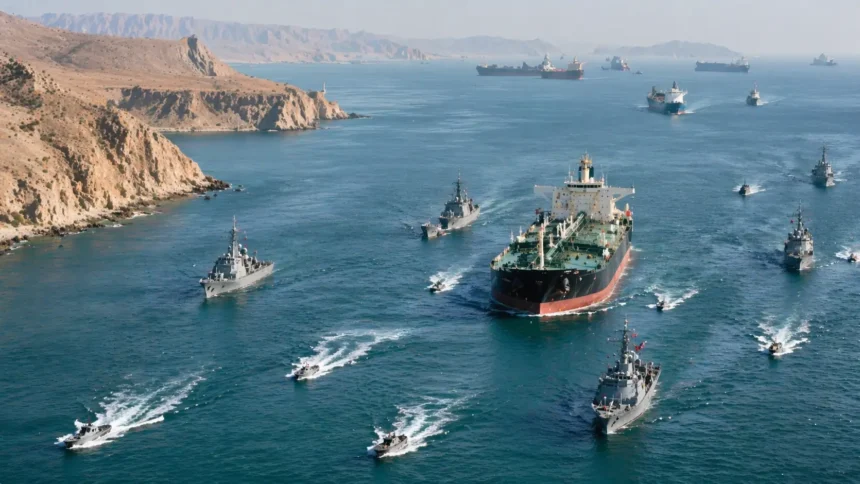
The most sensitive economic artery, the Strait of Hormuz, facilitates the passage of 20 percent of global oil and 25 percent of LNG supply. Iran is using it as a weapon to punish world with its sophisticated Anti- Area Denial strategy with its 2250 km long coastline. Iran can effectively turn the 234 km wide passage into a gauntlet with the help of its speedboats, midget submarines and anti-ship missiles. Furthermore, it has the arsenal of over 5000 naval mines which poses a persistent threat to the region.
The US insists that it has a right to transit through the narrow passage, whereas Iran claims the waterway as territorial sea. Iran has not ratified United Nations Convention of Law of Seas; therefore, it cannot be forced to follow the legality of international laws. This legal obstructionism along with the threats of strikes creates a military stalemate. The asymmetrical tactics used by Iran often neutralize material superiority, making a protracted conflict suicidal for the West.
Paradoxically, Iran’s strength of controlling the Strait of Hormuz is also its vulnerability. Iran is highly dependent on the strait for its on oil exports and refined fuel imports. Therefore, these vulnerabilities create a room for diplomacy. Pakistan is the key mediator between the conflicting parties by offering a neutral ground which shows that it is a growing regional power. Let us hope that these mediatory talks are fruitful or else the world will suffer a lot.