The Indus ReportThe Indus ReportThe Indus Report
Notification Show More
Font ResizerAa
  • Home
  • News
    • Pakistan
    • India
    • Middle East
    • America
    • Europe
  • Opinion
    • Analyses
    • Reviews
  • Economy and Business
    • Market Reports
    • Jobs
    • Inflation
    • Human Development Indicators
  • Tech
    • AI
    • ⁠Innovation
    • ⁠Industry
  • Lifestyle
    • Culture
    • Entertainment
    • ⁠Celebrity
  • Privacy Policy
  • About Us
  • Contact us
Font ResizerAa
The Indus ReportThe Indus Report
  • My Saves
  • My Interests
  • My Feed
  • History
Search
  • Home
  • News
    • Pakistan
    • India
    • Middle East
    • America
    • Europe
  • Opinion
    • Analyses
    • Reviews
  • Economy and Business
    • Market Reports
    • Jobs
    • Inflation
    • Human Development Indicators
  • Tech
    • AI
    • ⁠Innovation
    • ⁠Industry
  • Lifestyle
    • Culture
    • Entertainment
    • ⁠Celebrity
  • Privacy Policy
  • About Us
  • Contact us
Have an existing account? Sign In
Follow US
© 2026 THE INDUS REPORT Network. All Rights Reserved.

Home - Blog - Latest - Opinion - Analyses - Strait of Hormuz Enigma and its Global Repercussions

AnalysesNews

Strait of Hormuz Enigma and its Global Repercussions

TheIndusReport
Last updated: March 10, 2026 9:19 pm
TheIndusReport
Share
Strait of Hormuz Enigma and its Global Repercussions
SHARE

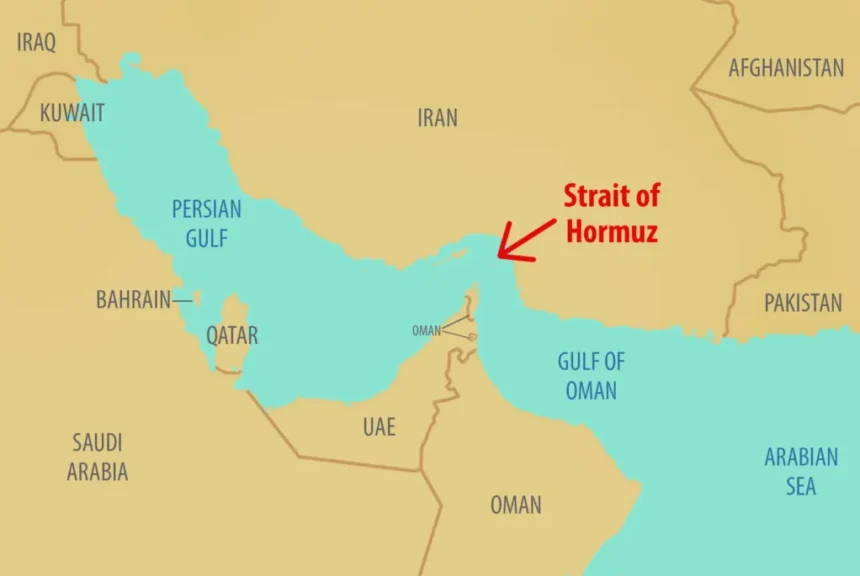
The Strait of Hormuz is not merely a waterway; it is the jugular vein of the global energy market. At its narrowest point, the shipping lanes are only two miles wide, yet they carry 20% of the world’s total oil consumption and one-fifth of the global liquefied natural gas (LNG) supply. Asian giants like China, India, and Japan receive nearly 90% of the crude flowing through the Strait. The 21-mile gap signifies the difference between industrial survival and total collapse. Unlike the Red Sea, the Persian Gulf has no alternative exit for its massive exports. If this door remains locked, there is no “Plan B” for the global economy.

For decades, the world feared a “kinetic” closure of the Strait of Hormuz: Iranian mines, sunken tankers, and burning hulls. Despite the heightened tensions following the strikes on Iran and the death of the Supreme Leader, Tehran has not laid a single mine in the channel. There are no blockades and no physical barriers. However, the broader geopolitical shockwaves of the crisis are already being felt across the region, particularly in countries like Pakistan that are closely tied to Gulf energy routes, as examined in The Iran Crisis and a New Storm for Pakistan. Instead, the “closure” was achieved through a simple, haunting radio warning.

A voice on a bridge frequency cautioned that safety could not be guaranteed; that was all it took. Within hours, Lloyd’s of London and the global maritime insurance market hit the kill switch. Without insurance, global shipping giants like Maersk, MSC, and Hapag-Lloyd simply ordered their fleets to drop anchor. The waterway was silenced not by a torpedo, but by a spreadsheet.

The repercussions of this insurance-led blockade extend far beyond the fuel pump. While the immediate oil crisis has seen Brent crude surge toward $93 per barrel and spiked tanker insurance premiums by over 1,000%, the most devastating impact is the “September Lag” it is a delayed fuse global food crisis. Because the Strait handles a third of the world’s fertilizer trade and a massive volume of grain, the current paralysis of shipments won’t empty grocery shelves for several months, with the real shock hitting global supply chains in September 2026.

This disconnect creates a dangerous illusion of stability in the West, even as the withdrawal of insurance by London underwriters has caused a staggering 80% drop in daily vessel transits, effectively freezing $25 billion worth of cargo at anchor without a single Iranian mine being laid. The Strait is open, yet the ships are still. We are learning that in 2026, the most effective weapon of war isn’t a missile, it is the withdrawal of a signature.

Share This Article
Email Copy Link Print
Previous Article The Iran Crisis and a New Storm for Pakistan The Iran Crisis and a New Storm for Pakistan
Next Article Fact-Check: Debunking the Disinformation Regarding the UAE’s Alleged Strike on Iran Fact-Check: Debunking the Disinformation Regarding the UAE’s Alleged Strike on Iran
Leave a Comment

Leave a Reply Cancel reply

Your email address will not be published. Required fields are marked *

Your Trusted Source for Accurate and Timely Updates!

Our commitment to accuracy, impartiality, and delivering breaking news as it happens has earned us the trust of a vast audience. Stay ahead with real-time updates on the latest events, trends.
FacebookLike
XFollow
InstagramFollow

You Might Also Like

What’s wrong with the Indian Pilots?
LatestIndiaNews

What’s wrong with the Indian Pilots?

By
TheIndusReport
Harvest at Risk: Unseasonal Rains and Hail Threaten Pakistan’s Wheat Belt
Pakistan

Harvest at Risk: Unseasonal Rains and Hail Threaten Pakistan’s Wheat Belt

By
TheIndusReport
USA "Boots on the Ground": A New Reality in the Persian Gulf
Middle EastAmerica

USA “Boots on the Ground”: A New Reality in the Persian Gulf

By
TheIndusReport
Fact-Check: Debunking the Disinformation Regarding the UAE’s Alleged Strike on Iran
AnalysesNews

Fact-Check: Debunking the Disinformation Regarding the UAE’s Alleged Strike on Iran

By
TheIndusReport
The Indus Report
Facebook Twitter Instagram

The Indus Report delivers global news, entertainment, viral trends, and fashion updates with accuracy, clarity, and a modern digital perspective.

Top Categories
  • Economy and Business
  • Lifestyle
  • News
  • Opinion
  • Tech
Support & Terms
  • About Us
  • Contact us
  • Privacy Policy
  • Terms and Conditions
  • Editorial Policy
  • Write For Us

©2026 THE INDUS REPORT Network. All Rights Reserved.

2026 The Indus Report Network. All Rights Reserved.
Welcome Back!

Sign in to your account

Username or Email Address
Password

Lost your password?