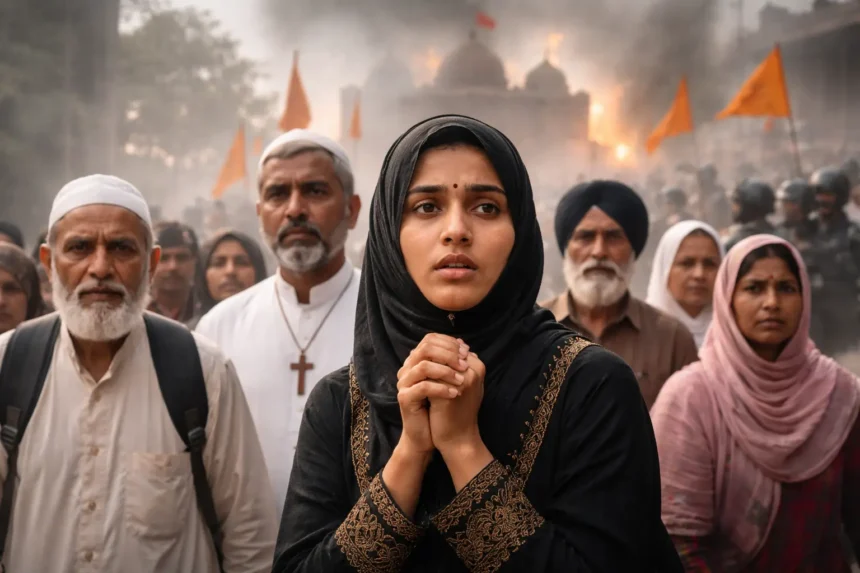
Religious minorities constitute approximately 20 percent if India’s population, while serious legislative and judicial measures have been taken under the ruling Hindutva regime to narrow the space for these communities. It raises serious alarms regarding the religious freedom and threatening secularist nature of India’s constitution.
A legal barrier to equality is imposed with the exclusion of Muslim and Christian converts from Scheduled Caste (SC) status. Despite the caste based difficulties that persist regardless of faith, the Supreme Court of India upheld the status quo, denying these converts access to the affirmative quotas in jobs and education reserved for Hindu, Sikh and Buddhist Dalits. This decision of the Supreme Court penalizes conversion, forcing marginalized individuals to choose between their faith and upward mobility.
With the proliferation of anti-conversion laws, these laws have become primary tools for regulating personal belief at the state level. States such as Utter Pradesh, Gujarat, and Madhya Pradesh have already tightened their laws against religious conversions, with the requirement of notifying authorities before changing their religion. These statues are framed by the Hindutva-led extremist groups that frame narratives of viewing conversion through the lens of historical grievance or proselytization. With the politicization of love Jihad, targeting interfaith marriages and creating an atmosphere of surveillance, the discourse has further inculcated in the social sphere.
There is a systematic campaign of structural marginalization, as the constitutional autonomy of minority run education institutions is threatened. Moreover, by providing an accelerated path to citizenship exclusively for non-Muslim immigrants, the Citizen Amendment Act (CAA) is destroying the secular foundations of India. This law serves as a tool for demographic engineering rather than humanitarian relief. India is in international limelight over the concerns related to the religious freedom. The US Commission on International Religious Freedom (USCIRF) has designated India as a country of particular concern over religious freedom since 2020. The credibility of India’s democratic pluralism is under significant strain with anti-conversion laws, communal unrest and targeting of minority institutions.