Following a precision counter terrorism operation by the Pakistan Air Force on March 16, 2026, a high velocity disinformation campaign was launched by the Taliban’s Deputy Government Spokesperson, Hamdullah Fitrat, who utilized fabricated casualty figures to mask the destruction of a strategic military asset. Utilizing his platform on X, Fitrat claimed that a “2,000 bed drug rehabilitation center” named Omid (Hope) in Kabul had been decimated, resulting in the deaths of 400 innocent patients. However, technical evidence and field intelligence have completely debunked this narrative, exposing the facility as a fortified weapons depot.
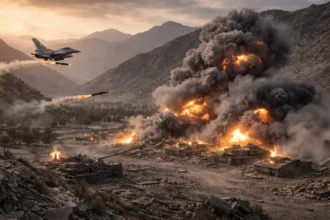
Real time aerial surveillance released by Pakistani security sources provides the “smoking gun” that Fitrat’s reports sought to hide. High-definition drone footage shows massive secondary detonations immediately following the initial impact. These “cook-offs” are physically impossible for a medical facility as they indicate the presence of high-grade munitions, rocket propellants, and suicide vest components.
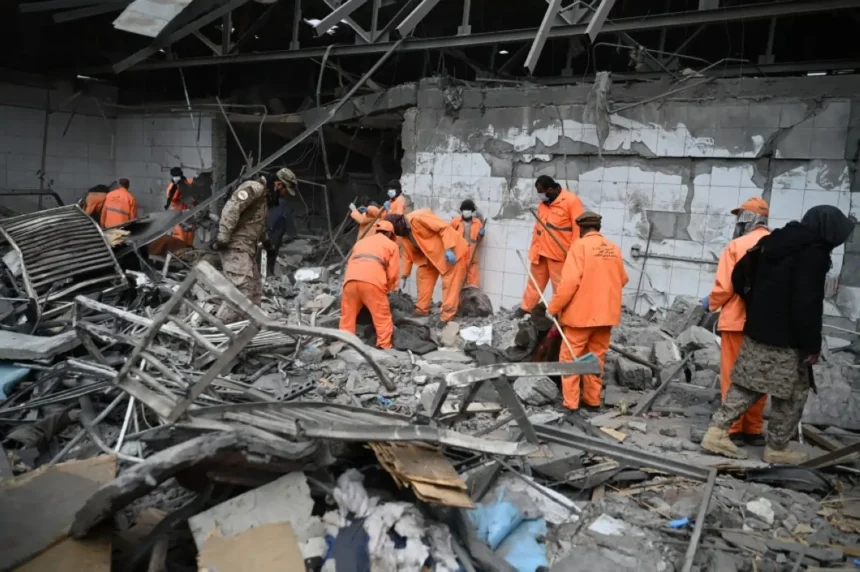
It can also be noted that the “Rehabilitation Centre” flags and banners appeared in media reports only several hours after the kinetic action. Ground imagery reveals a complete absence of hospital infrastructure; no medical beds, pharmacy caches, or specialized equipment were found in the rubble. Instead, the debris consisted of charred military grade technology and anti drone components. This suggests a post strike “theatre” designed to manipulate international opinion and paint Pakistan as an aggressor.
Under Operation Ghazab-Lil-Haq, Pakistan’s military maintains a zero collateral damage mandate. The strike was a surgical and intelligence based response to a truck bombing on March 16 that killed seven Pakistani soldiers. By targeting the specific technical support nodes used for these cross border attacks, Pakistan has neutralized a legitimate threat while the Taliban resort to using “human shields” and fabricated narratives to mask their strategic losses. This desperate reliance on “lawfare” and victimhood narratives only underscores the Taliban’s inability to secure their borders or justify the harboring of proxy groups. Pakistan’s military doctrine remains focused on surgical precision using sophisticated weapons, ensuring that the architects of terror are neutralized, while innocent remain shielded from the crossfire.