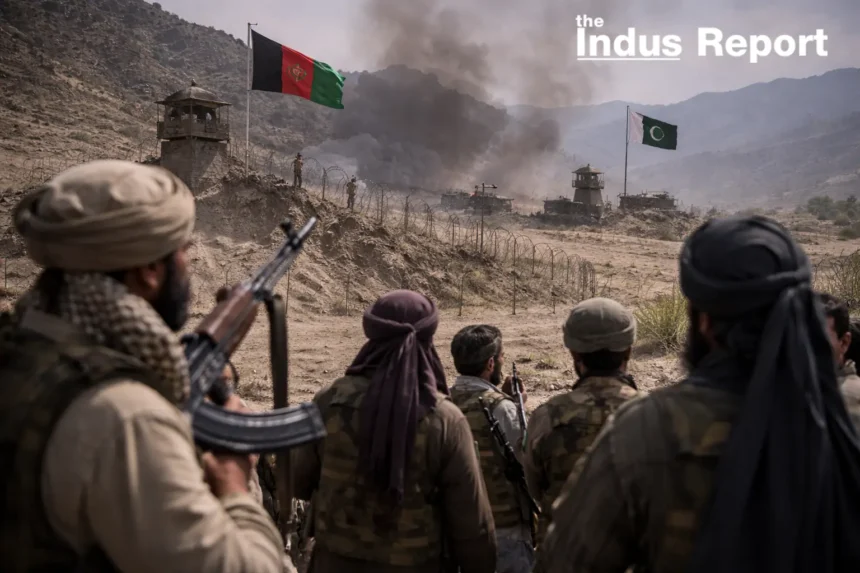
The historical narrative of Pakistan-Afghanistan relations is often viewed through the lens of the 1979 Soviet invasion, yet the seeds of discordance were sown at Pakistan’s very inception. Afghanistan holds the distinction of being the only country to oppose Pakistan’s membership in the United Nations in 1947, signalling a century of irredentism over the Durand Line.
From 1947 through the 1960s, Kabul’s primary foreign policy objective was the “Pashtunistan” project: a separatist movement aimed at carving out Pakistani territory. This was not merely a diplomatic disagreement it was a determined effort to undermine the writ of the Pakistani state. The Afghan government funded sub nationalist proxies, distributed arms, and facilitated cross border incursions. These early “low-level” hostilities paved the way for a culture of instability, forcing an emerging Pakistan to divert nearly two-thirds of its budget toward defense as early as 1949.
The most profound blow to Pakistan’s stability came on October 16, 1951, with the assassination of Prime Minister Liaquat Ali Khan. The assassin, Said Akbar, was an Afghan national and a former brigadier in the Afghan army. The motive was deeply rooted in the Pashtunistan issue; Akbar was a Pashtun extremist reportedly fueled by Kabul’s rhetoric against Pakistan’s territorial integrity. Intelligence reports and historical claims even suggested that Afghan officials had attempted to bribe or influence Akbar to eliminate the Prime Minister to catalyze a state collapse. This act of political terrorism decapitated Pakistan’s democratic leadership, triggering a political collapse to undermine the nascent state of Pakistan.
During Pakistan’s existential struggles with India, Afghanistan’s posture was a calculated mix of neutrality and underlying hostility. In the 1965 War, King Zahir Shah maintained a formal neutrality largely due to Western and Iranian pressure. However, by the 1971 War, Kabul remained officially neutral but served as a diplomatic and moral support base for Indian narratives, further isolating Pakistan. Throughout this era, the US facilitated this dynamic; by providing aid to Kabul to prevent a total Soviet tilt, Washington inadvertently emboldened a state that consistently sought to weaken Pakistan’s western flank, leaving Islamabad permanently sandwiched between two hostile fronts.
In response to these persistent security threats emanating from Afghan territory, Pakistan has periodically adopted firm counter-terror strategies and border operations, most recently reflected in Pakistan’s Operation Ghazab Lil Haq