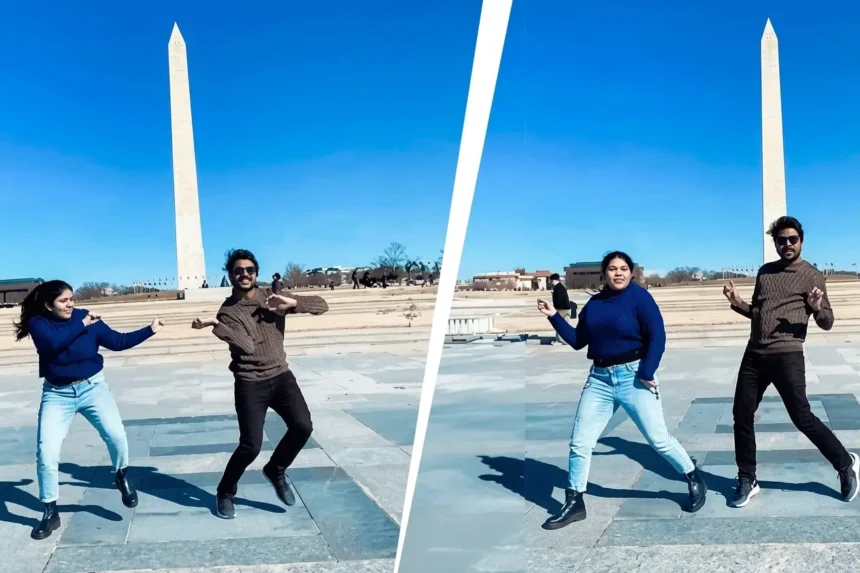
In early March 2026, a viral video featuring an Indian couple dancing at the National World War II Memorial in Washington, D.C. ignited a fierce international debate over public decorum and the sanctity of historical sites. The footage shows the pair performing a choreographed “Don’t Rush Challenge” routine against the backdrop of the memorial’s fountain and granite columns, has become a focal point for critics of social media culture.
For many Americans, the memorial is a site of solemn remembrance dedicated to the 16 million citizens who served and the 400,000 who gave their lives. On X (formerly Twitter), the backlash was swift and severe. Many accounts criticized the act as a “total lack of respect for heritage“, while others pointed out the irony of the performance given that India itself sent over 2.5 million soldiers to fight in the same war. The controversy intensified when an activist tagged the cybersecurity firm Palo Alto Networks, identifying the dancer as Madhu Raju, a Cloud Network Security Engineer.
The fallout has been personally and professionally devastating for those involved. In response to online harassment, Raju deactivated his LinkedIn, Instagram, and the website for his Dallas-based dance studio. More alarmingly, the incident has drawn the attention of U.S. immigration authorities. Because federal guidelines for the National Mall prohibit activities that disrupt the “atmosphere of peace and respect“, there is ongoing administrative scrutiny regarding whether such conduct violates the terms of a non-immigrant H-1B work visa.
While some members of the Indian American community have defended the couple, the incident remains a stark warning. It highlights the high stakes of viral fame in an era where cultural insensitivity at a national monument can lead to immediate and life altering legal consequences.