The Indian government’s swift response to the brief removal of Prime Minister Narendra Modi’s Instagram and Facebook video has sparked an important debate—not just about social media accountability, but about political priorities.
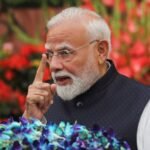
When Meta temporarily removed Modi’s July 23 video due to what the company later described as a technical error, the reaction from New Delhi was immediate. The parliamentary Standing Committee on Communications and Information Technology, headed by BJP MP Nishikant Dubey, blamed Meta rather than treating the incident as a routine moderation mistake. Within hours, company officials were summoned, and Dubey warned that Meta risked losing its “safe harbour” protections if CEO Mark Zuckerberg did not apologise. Meta moved quickly to contain the controversy. Joel Kaplan, the company’s Chief Global Affairs Officer, publicly apologised to Information and Broadcasting Minister Ashwini Vaishnaw, acknowledging the error and confirming that the video had been restored.
The episode demonstrated the Indian government’s ability to react rapidly when it considers an issue important. Yet that speed inevitably invites comparison with another event unfolding at exactly the same time. Modi’s video itself was recorded during the height of nationwide youth-led protests organised under the banner of the Cockroach Janta Party movement. Initially triggered by examination irregularities, the demonstrations soon evolved into a broader expression of frustration over unemployment, shrinking opportunities, and what many protesters viewed as an increasingly unresponsive political system. For weeks, students demanded answers. Their demonstrations spread across cities, while social media became the primary platform for organising and amplifying their voices. Despite the scale of the protests, many participants argued that the government’s response was slow, reactive, and focused more on controlling the political narrative than addressing the underlying grievances.
Ironically, the video Meta mistakenly removed was itself an attempt by Modi to engage directly with young Indians. Speaking in a vertical, Instagram-style format—his first such videos—the prime minister promised tougher laws and harsher punishment against examination paper leaks. The shift reflected a broader effort by the BJP to communicate with Generation Z on platforms where younger audiences spend their time.
But communication and action are not the same.
The contrast is difficult to ignore. A platform’s technical mistake triggered parliamentary scrutiny, public warnings, and a corporate apology within days. Student concerns over examinations, employment, and educational reforms took considerably longer to receive sustained political attention, despite affecting millions of young Indians.
That disparity raises legitimate questions about governance. Should administrative urgency be reserved primarily for issues affecting political messaging? Or should the same institutional energy be directed toward addressing the socioeconomic concerns that gave rise to the protests in the first place?
Governments have every right to question technology companies when errors affect public communication, particularly that of elected leaders. Social media platforms exercise enormous influence and should be transparent and accountable for moderation decisions. However, democratic accountability should extend beyond regulating digital platforms. It should also include responding promptly to citizens whose concerns originate outside the online world. India’s parliamentary committees cannot themselves punish companies or revoke legal protections; such actions require decisions by the government or the courts. Nevertheless, the speed with which Meta executives were called to explain themselves highlighted the state’s capacity for rapid intervention when political stakes are high.
The broader lesson may have less to do with Meta than with governance itself. Citizens often judge governments not only by the decisions they make, but by the urgency with which they make them. For many young Indians, the lasting question is unlikely to be why a video disappeared for a few hours. Instead, it is whether their concerns about education, employment, and opportunity will ever receive the same immediate attention.