Afghanistan is once again emerging as a region of strategic concern, with signs of growing armed resistance against the Taliban-led Islamic Emirate of Afghanistan (IEA). While these groups do not yet pose an immediate threat to Taliban rule, the worsening security environment reflects deep ethnic, political and economic divisions that could reshape Afghanistan’s stability in the years ahead.
The latest indication of this trend came with former Afghan National Army commander Sami Sadat’s announcement calling for a renewed resistance movement against the Taliban. Sadat, who commanded government forces during the final years of the previous Afghan republic, urged anti-Taliban factions to unite under a common strategy.
Sami Sadat Announces the Start of United Front Attacks Against the Taliban
— Aamaj News English (@aamajnews_EN) August 2, 2026
Sami Sadat, the leader of the United Front, announced in a statement that the front has begun attacks against the Taliban, saying that the idea of reaching a solution through negotiations with the…1️⃣ pic.twitter.com/BQXjjpsP49
Although it remains unclear whether his appeal will translate into a coordinated military campaign, the announcement has renewed attention on the fragmented resistance operating across northern Afghanistan.
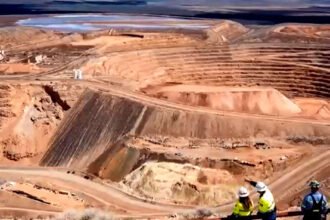
Among the most sensitive regions is Badakhshan, a mountainous province bordering Pakistan, China and Tajikistan. Historically a stronghold of anti-Taliban forces during the 1990s, the province continues to experience simmering tensions. Ethnic divisions between Tajik communities and the predominantly Pashtun Taliban leadership, disputes over lucrative gold and precious stone resources, dissatisfaction among the Ismaili Shia minority and the economic impact of the Taliban’s ban on poppy cultivation have all contributed to growing local grievances.
Alongside Badakhshan, Panjshir Valley and the Hazara Highlands remain centres of anti-Taliban sentiment. While these resistance movements are fragmented and lack the military capability to seriously challenge the Taliban government, their continued presence highlights the difficulties the IEA faces in consolidating authority across Afghanistan’s diverse ethnic landscape.
For Pakistan, these developments carry significant strategic implications. Renewed instability in northern Afghanistan could create opportunities for militant groups to exploit security vacuums while complicating border management, refugee flows and regional connectivity. Islamabad’s relations with Kabul are already strained by the continued presence of the Tehreek-e-Taliban Pakistan (TTP), cross-border militancy and unresolved border disputes.
Recent policy discussions hosted by the Centre for Research and Security Studies (CRSS) emphasized that while Pakistan and Afghanistan share deep historical, cultural and religious ties, these positives are increasingly overshadowed by practical challenges. Addressing terrorism and border security will ultimately determine the future of bilateral relations. A peaceful and inclusive Afghanistan remains essential not only for its own people but also for the broader stability of South and Central Asia.