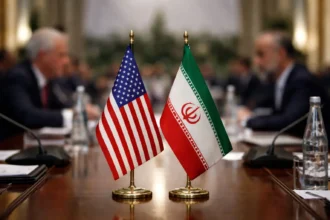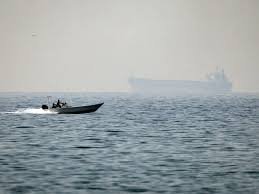
The sudden change atop Iran’s Supreme National Security Council (SNSC) — coming amid heightened Gulf tensions and unresolved Oman-Iran talks over the Strait of Hormuz — points to a tougher phase in Tehran’s diplomatic posture.
Bagher Zolghadr’s replacement by veteran IRGC commander Mohsen Rezaei is significant not just as an administrative reshuffle, but because of the institutional weight the SNSC carries. Established under Article 176 of Iran’s constitution, the council brings together senior civilian, military and judicial officials to deliberate on defense and foreign policy, with final decisions requiring the Supreme Leader’s approval. The secretary runs the council’s Secretariat, sets its agenda, coordinates across state institutions, prepares policy options and oversees implementation.
Rezaei’s appointment carries added weight because he has simultaneously been named the Supreme Leader’s representative on the council — a dual role his predecessor didn’t hold. That gives him greater influence over the machinery that shapes national security policy, alongside a direct channel to Supreme Leader Mojtaba Khamenei.
The move also reflects a broader rebalancing of power in Tehran following the killing of former Supreme Leader Ayatollah Ali Khamenei in a US-Israeli strike in February 2026, and the subsequent assassination of SNSC secretary Ali Larijani in March — the event that first put Zolghadr in the post.
Zolghadr’s exit followed reported friction over the transition, including President Masoud Pezeshkian’s initial reluctance to endorse Rezaei. The matter was reportedly resolved after a meeting between Khamenei and Pezeshkian. Khamenei then named Rezaei as his representative on the SNSC, while Zolghadr moved into the role of the Supreme Leader’s political adviser; Pezeshkian subsequently issued the presidential decree appointing Rezaei as secretary.
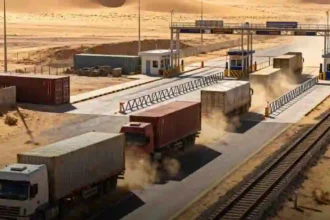
The timing matters. Iran and Oman have reportedly moved close to a technical arrangement on a safe shipping corridor through Hormuz, including agreed coordinates for the route, with a joint statement said to be in the final stages. But Tehran has paired that progress with a steep list of conditions for actually reopening the strait: an end to the US naval blockade, withdrawal of US forces from the area, a formal end to the war, compensation for war damage, and the release of frozen Iranian assets. Iran’s foreign minister has said no direct US-Iran talks are underway, only indirect contact through intermediaries.
A plausible sequence would begin with the Iran-Oman technical arrangement, followed by reciprocal US steps on the blockade and on Iranian commercial shipping, which could gradually open the door to indirect or direct US-Iran talks. Only then would harder issues — Iran’s nuclear program, sanctions, frozen assets, and the broader regional security architecture — become negotiable.
For Pakistan, which has invested diplomatic capital in the Islamabad process, this bears close watching. Islamabad’s interest goes beyond keeping ships moving through Hormuz; it also wants to prevent the strait from becoming a recurring tool of coercive leverage between Iran and the United States.
Rezaei’s appointment suggests Tehran is entering the next phase of negotiations with tighter security-establishment oversight and a greater emphasis on coercive leverage. The hardline consensus on Hormuz hasn’t necessarily changed — but the official now responsible for turning that consensus into policy carries considerably more military authority, political experience and institutional standing than his predecessor.