Immersed in the darkness of slavery under the tyrannical Dogra rule, the land of Jammu and Kashmir witnessed a historic awakening on July 13, 1931. This pivotal day brought with its rays the blood-red beam of the Kashmir Freedom Movement, forever altering the geopolitical landscape of the region. From Pakistan’s perspective, this day symbolizes the foundational chapter of an unyielding struggle against foreign occupation, state terrorism, and autocratic subjugation—a struggle that remains deeply intertwined with Pakistan’s identity.
The Spark of Rebellion
The immediate catalyst for the uprising began on June 21, 1931, during a historic protest demonstration in Srinagar against the desecration of the Holy Quran by Dogra forces. Amidst the outrage, a brave young man named Abdul Qadeer stood before the crowd and delivered a fiery speech, inviting Kashmiris to break the chains of slavery:
“Muslims, The time has now come to respond to a brick with a stone; petitions and memoranda will make no difference to tyranny and oppression, nor will the issue of the insult to the Quran be resolved. Stand on your own feet and stand firm against injustice. Demolish this palace brick by brick.”
Following this speech, Abdul Qadeer was promptly arrested under charges of sedition. However, his words had already ignited a fire in the hearts of a populace fed up with decades of economic exploitation and religious persecution.
The Ultimate Sacrifice at Srinagar Central Jail
On July 13, 1931, thousands of passionate Kashmiris gathered at the Central Jail in Srinagar to witness Abdul Qadeer’s trial. As the time for the Zuhr (afternoon) prayer approached, a Muslim climbed a nearby wall to deliver the Adhan (the call to prayer).
In an act of supreme brutality, District Magistrate Trilok Chand ordered the police to open direct fire. The first caller was shot dead instantly. Defying the bullets, another young man stepped forward to continue the call from where it was broken, only to be martyred. One after another, twenty-two brave souls took turns to complete a single Adhan, sacrificing their lives to proclaim the greatness of Allah.
Seventeen individuals died on the spot, while five more succumbed to their injuries at the Jamia Masjid. Defying the oppressive state, the mourners made a flag from the blood-stained shroud of a martyr and marched through the city. These holy martyrs were later laid to rest at the Dargah Naqshbandi Sahib.
The unparalleled bravery of the Kashmiri people on that fateful day was immortalized by the diverse group of individuals who stepped forward to give their lives. Among the twenty-two prominent worshippers martyred outside the jail premises were twenty-five-year-old Ghulam Muhammad Halwai from Jamia Masjid, thirty-three-year-old Abdul Khaliq Shora of Wazah Pora, twenty-seven-year-old Ghulam Nabi Kalwal from Pandan, and twenty-year-old Ghulam Sufi Muhammad of Dhari Bal. Joining this sacred ranks of defiance were nineteen-year-old youth Muhammad Ramadan from Khanayar, alongside older elders who refused to bow to tyranny, including sixty-year-old Shaban Jumakai from Nowhatta Kadal and fifty-year-old Wali Rani from Bait Pora, all of whom willingly took bullets to the chest to complete the sacred call to prayer.
Testimonies of Truth
The awe-inspiring courage of these martyrs was recognized even by their adversaries. The state’s Prime Minister, Mr. Wakefield, remarked after examining the bodies:
“I am amazed at the bravery of these young men. They all took bullets to the chest. No one took a bullet in the back.”
Prominent Kashmiri Pandit scholar Prem Nath Bazaz recognized the non-sectarian, anti-imperialist nature of the event in his book Inside Kashmir, writing that July 13 was the “declaration of war by the oppressed against the oppressor.” Similarly, the legendary Kashmiri leader Chaudhry Ghulam Abbas noted in Kashmakash that without this day, the political history of Kashmir would have been entirely different. Dr. Salamuddin Niaz beautifully summarized it as the day the freedom movement “was baptized with the blood of martyrs.”
The Modern Resonance and Pakistan’s Stance
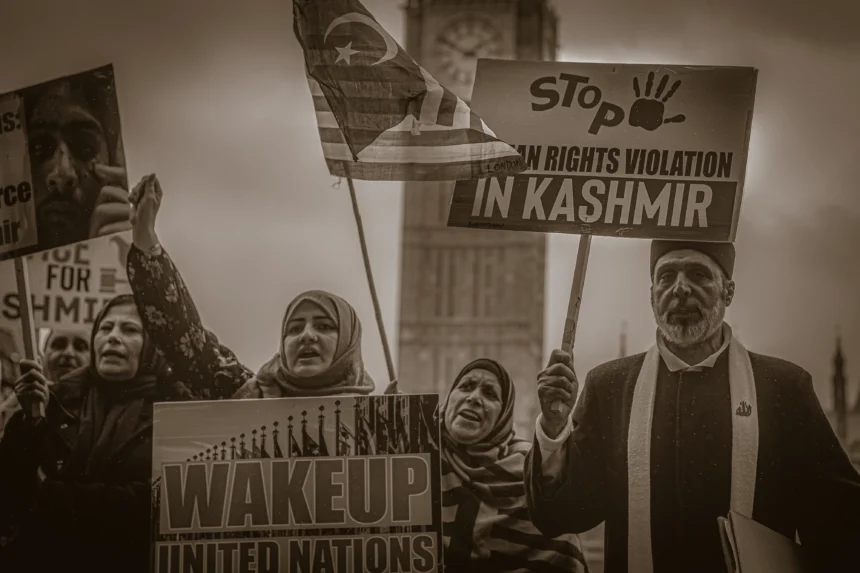
From 1931 to the modern day, the trail of blood on the highway of freedom has never dried. From Pakistan’s perspective, the blood of the 1931 martyrs flows directly into the veins of the modern resistance. When Kashmiri youth today face the horrors of Indian pellet guns, when heroes like Afzal Guru go to the gallows, and when commanders like Burhan Wani and Riyaz Naikoo embrace martyrdom, the message remains the same.
Despite India’s heavy militarization of Indian Illegally Occupied Jammu and Kashmir (IIOJK) and its recent attempts to erase July 13 from the official holiday calendar, the spirit born in 1931 remains eternal. Every martyr’s funeral that is wrapped in the green crescent flag of Pakistan echoes the absolute truth: “We are Pakistanis, Pakistan is ours.” The call to prayer started in 1931 will inevitably find its completion in total freedom.