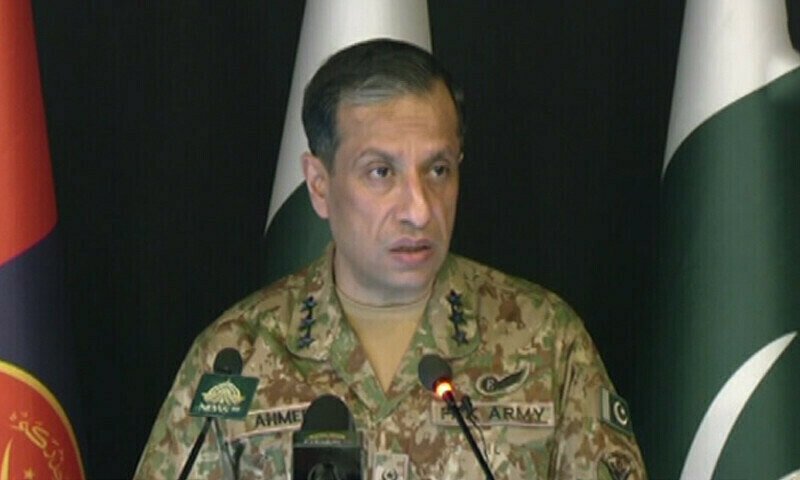
Director General Inter-Services Public Relations (DG ISPR) Lt Gen Ahmed Sharif Chaudhry has said Pakistan is not a “hard state” in the true sense of the term, stressing that the concept is rooted in effective governance, the rule of law, and institutional discipline rather than authoritarianism.
Speaking at a press conference focused on the security situation in Balochistan, the military spokesperson said the briefing was intended to address concerns about the province while explaining Pakistan’s broader national security landscape. He noted that the debate surrounding the idea of a “hard state” often suffers from misconceptions and clarified that it should not be equated with coercion or authoritarian governance. The DG ISPR said a hard state is one where laws are implemented impartially, institutions function effectively, and citizens are held equally accountable under the Constitution. He maintained that such a system relies on strong governance, institutional integrity, and public confidence in the rule of law rather than the concentration of power.
Drawing on international examples, he said countries that have achieved rapid development and long-term stability, including China and Singapore, did so by strengthening governance structures, ensuring consistent implementation of laws, and building disciplined institutions. According to the DG ISPR, these examples demonstrate that sustainable national progress depends on effective state institutions and adherence to legal principles.
He emphasised that Pakistan’s path forward lies in building such a governance model through practical and sustained reforms. “To build a hard state, Pakistan must take concrete and sustainable steps,” he said, adding that institutional effectiveness and the equal application of the law remain essential for long-term national stability and development. DG ISPR also said the concept does not imply military rule or extraordinary measures. Instead, he described it as a constitutional framework in which every individual is subject to the same legal standards and disputes are resolved exclusively through lawful and constitutional processes.
The military spokesperson also underlined the importance of balancing rights with responsibilities. Referring to Article 5 of the Constitution, he said loyalty to the state and obedience to the Constitution and the law are fundamental duties of every citizen. He stressed that constitutional obligations are as important as the rights guaranteed to citizens and form the basis of a stable democratic order. DG ISPR further called for greater national cohesion, urging Pakistanis to place their national identity above provincial, ethnic, or other affiliations. He said unity is essential for addressing the country’s security and governance challenges and argued that every citizen’s foremost identity should be that of a Pakistani.
His remarks came as part of a wider briefing on the security environment in Balochistan, where he discussed issues related to national security, governance, and constitutional responsibility.