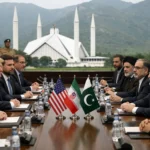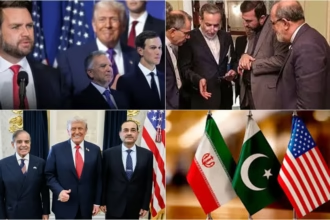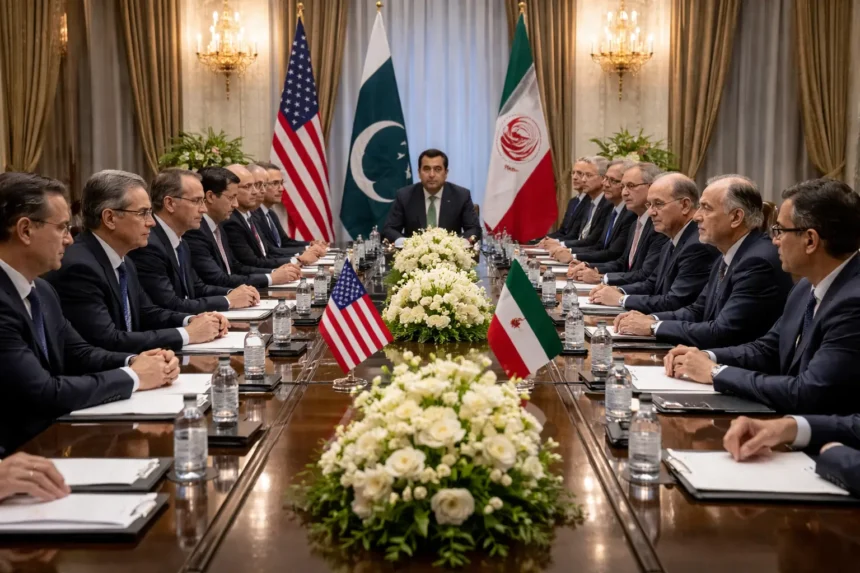
For the first time in nearly half a century, the silence between Washington and Tehran wasn’t broken by the sound of rhetoric or artillery, but by the quiet scrape of chairs at a negotiating table in Islamabad. After 47 years of frozen hostility, the world is learning that a “stalemate” isn’t a failure it is the first time since 1979 that both nations have chosen neutral ground to sit across from one another. In geopolitics, the first 21 hours of conversation are often the hardest; in Islamabad, those hours didn’t just preserve a ceasefire they established a foundational beginning for a long overdue diplomatic journey.
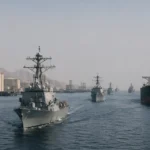
While the marathon session in Pakistan’s capital concluded without a signature, it successfully provided the essential “neutral floor” required for direct engagement. As of April 14, 2026, the diplomatic momentum is already shifting toward a second round of negotiations. While Pakistan remains a central mediator, reports suggest that the Sultanate of Oman is being positioned as the likely venue for the next high level follow-up. Oman has long served as a “discreet backchannel” for the two rivals, and moving the dialogue to Muscat may address the “maximalist” demands that stalled the early negotiations. The immediate priority for these Omani mediated efforts is expected to be twofold; extension of the current ceasefire and refining the technical nuances of maritime security in the Strait of Hormuz.
The transition to a second phase faces significant headwinds. President Donald Trump has already signalled a return to “Maximum Pressure,” claiming he could “take out Iran in one day” and initiating a naval blockade to end what the White House calls “Iranian extortion”.
Despite this, the door remains ajar. Iran’s Foreign Minister Abbas Araghchi noted that the sides were “inches away” from a deal in Islamabad before encountering “shifting goalposts”. This sentiment mirrors the official Iranian stance that it is now “time for the US to decide whether it can earn our trust”.
Pakistan played a masterstroke of “bridge building” by hosting the first round of negotiations and continues to work closely with regional partners like Turkey and Egypt to ensure the momentum isn’t lost. As analysed by Sky News, the collapse of the initial talks was less a failure and more a battle for leverage.
As Trita Parsi observed, neither side has rejected the path of dialogue,
and Vali Nasr suggests we are witnessing a global “test of endurance”.
Whether the next handshake happens in Islamabad or Muscat, the fact remains that the 47 year wall has been breached. The second phase must now transform this hard won dialogue into a sustainable peace.