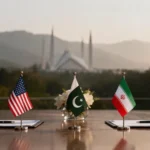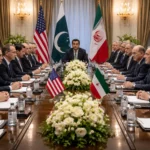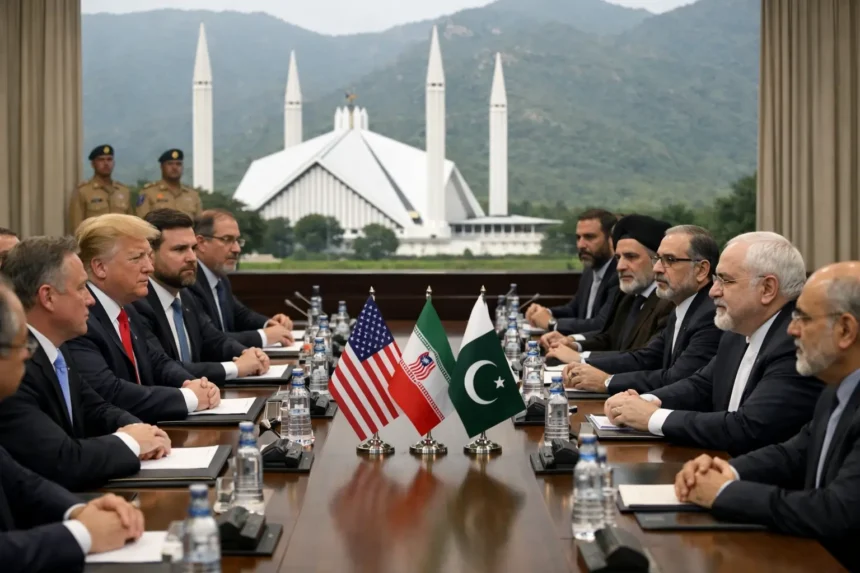
The diplomatic community is buzzing with reports of Islamabad talks 2.0, an expected deal that can end nearly five decades of frozen relations between Iran and the United States. Analysts have also pointed that the US and Iran were about to secure a deal in first round of talks held in Islamabad, but personal intervention of President Donald Trump delayed it as he wants himself to sign a deal with Iran.
While the deal was nearly finalized between American and Iranian delegations, in order to aim a historic legacy Trump recalled Vice President JD Vance. The rational is centered on political optics to be a primary signatory on what is being called as mother of all deals.
Islamabad is once again expected to host the two conflicting parties within next two to three days. This shows that the middle power provides a bridge between conflicting interests while offering the high-level security protocols necessary for a potential visit. The signed agreement in Islamabad would bring the US and Iran together first the first time since the 1979 revolution in Iran.
This push for an Iran deal by President Trump appears to be part of a larger strategy. Following the expected talks in Islamabad, President Trump is also expected to visit China in May where he will be negotiating with the North Korean leader. The relations between North Korea and the US are also strained for many decades because of the pursuit of the weapons of mass destruction by the former. Therefore, it is expected that Trump might broke another major agreement with Kim Jong Un. By attempting to secure two massive geopolitical aims in a single month, the Trump administration seems to be aiming for a grand strategy that will reshape the geopolitical landscape of the Middle East and the East Asia.