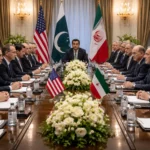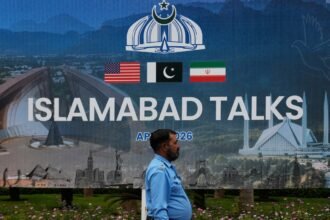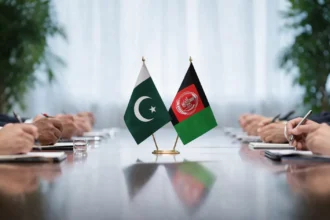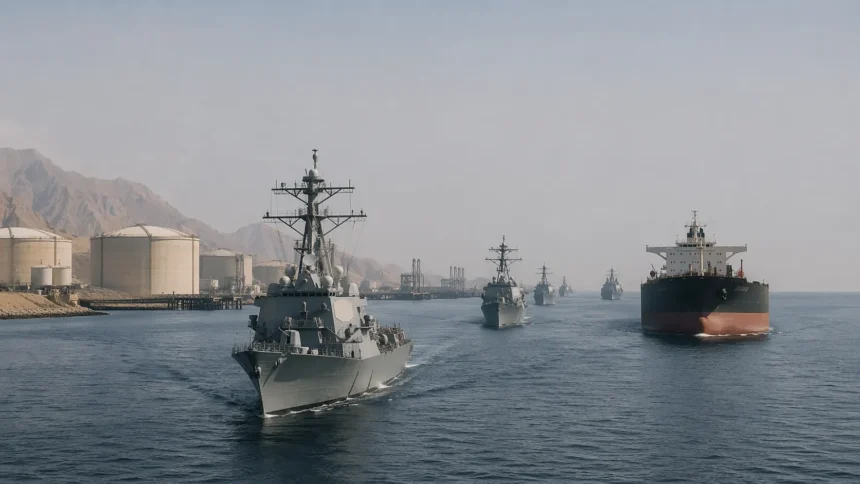
The Strait of Hormuz remains the jugular vein of the global energy market, but as of mid April 2026, it has become the site of an unprecedented maritime siege. Following the Islamabad Peace Talks; where high level negotiations between U.S. and Iranian officials could not secure a new regional framework, the U.S. has enforced a full naval blockade of all Iranian ports. While the U.S. Navy aims to zero out Iranian exports to force a return to the table, the reality on the water has evolved into a complex game of high stakes leverage, shadow fleets, and alternative land based corridors.
For Tehran, the blockade isn’t just a loss of future profit, it is a structural catastrophe. Prior to the enforcement, Iran was enjoying a wartime windfall, earning nearly $5 billion in a single month by charging transit tolls and selling oil at a premium while it maintained control over the Strait’s shipping lanes. This revenue stream has been effectively impacted. Furthermore, Iran is currently sitting on a massive buffer of roughly 157 million barrels of oil in floating storage. However, with onshore storage limited to 55 million barrels, experts warn that capacity will be reached in less than two weeks. This creates a shut-in risk where aging oil wells must be forcibly closed, a move that can cause permanent geological damage and erase up to 500,000 barrels per day of future production capacity.
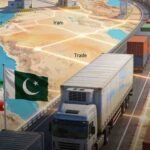
Despite this “maximum pressure,” Tehran has developed several relief valves to prevent total domestic collapse. A primary strategic pillar is the China Iran Land Bridge. As a critical node in the Belt and Road Initiative, rail corridors now allow for the movement of goods and refined products through Central Asia, bypassing U.S. naval interdictions entirely. Simultaneously, Beijing remains the ultimate diplomatic and economic escape. Nearly 98% of Iranian oil currently on the water is destined for China’s independent refineries. Tehran is gambling that Washington will not risk the global economic shock of seizing cargo destined for China, especially as trade is increasingly settled in Renminbi via the CIPS system.
Finally, the 1,000 kms Goreh-Jask pipeline offers a physical exit point on the Gulf of Oman, outside the immediate chokepoint of the Strait. While its current effective capacity is limited to about 300,000 barrels per day, it represents a decade of preparation for this exact doomsday scenario. As global oil prices push past $120 per barrel, creating a “grocery supply emergency” across regional markets, the regime is betting that the pain of the global energy shock will eventually outweigh the West’s resolve to maintain the blockade.