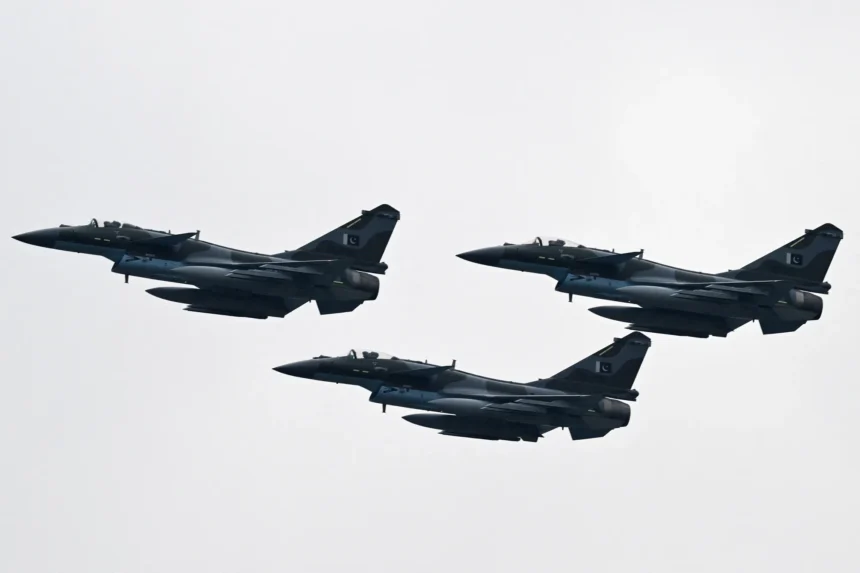
Military escalations between states yield to unintended economic consequences, this also happened with the India-Pakistan May 2025 conflict. Following the dramatic dog fight between India and Pakistan that resulted into the loss of 7 fighter jets of Indian Air Force (IAF), the regional arms race has reached to the next level. While the conflict left diplomatic ties in tatters, it was China’s defense equipment that emerged victorious and French defense industry suffered the most with Pakistan Air Force (PAF) precision strikes.
According to the Bloomberg reports, China’s AVIC Chengdu Aircraft Industrial Group, the manufacturer behind the J-10C and JF-17 fighter jets used by PAF in the May 2025 conflict, is witnessing an unprecedented financial windfall. The company’s profits are record breaking after Marka-e-Haq, with revenue surging 15.8% to reach 75.4 billion Yuan ($11 billion). The net profit of the year also climbed to 6.5% totaling 3.4 billion Yuan.
In the first quarter of 2026, the sales of the company have nearly doubled with sales rising over 80 percent year on year. This surge in the sales is a direct reflection of the intensified demand for Chinese aviation technology in the wake of IAF’s jet losses, as PAF utilized Chinese jets brilliantly.
Whereas, Prime Minister Narendra Modi launched Operation Sindoor with the intention of asserting regional dominance, but it proved to be as self-defeating project. Rather than securing a strategic advantage, the engagement served as a global showcase of Pakistan’s unmatched defense with Chinese military hardware. This conflict has not only bolstered Pakistan’s confidence in Chinese equipment, but it also has attracted defense agreements from many states because of its cost-effectiveness and battle proven alternative to traditional defense suppliers.
Furthermore, IAF’s performance in Operation Sindoor not only dropped sales of French jets, but it has also failed to secure confidence in India’s heavy investments on its indigenous Hindustan Aeronautics Limited (HAL). This poor performance has also degraded India’s growing regional prowess of the net-security provider.
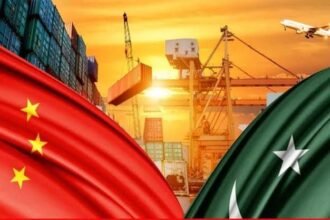
Pakistan’s diplomatic front has also played a key role in securing this vital image of net-security provider after Operation Sindoor. Its unmatched aerial superiority and diplomacy has helped it to attain the status of a middle power. It will help to elevate friendship between Pakistan and China as Pakistan is the first testing laboratory of Chinese equipment.
For the Modi government, the financial success of AVIC Chengdu serves as a stark reminder of the complexities of modern warfare. “Operation Sindoor” was intended to project strength, yet its most tangible legacy may be the economic and technological empowerment of China’s premier fighter jet manufacturer. As AVIC Chengdu continues to post record numbers, the shadow of the 2025 conflict looms large over the future of South Asian security and the global arms market.