The announcement on April 28, 2026, that the United Arab Emirates will exit OPEC effective May 1 has triggered a profound existential crisis for the 65 year old oil cartel. Analysts are already calling this “the beginning of the end of OPEC,” as the departure of its third-largest producer threatens to dismantle the group’s foundational ability to command global oil markets.
To grasp the magnitude of this exit, one must look at the organization’s structure. Established in 1960 to challenge Western oil monopolies, OPEC traditionally unified the policies of major producers. In 2016, this expanded into OPEC+, a framework that includes Russia and nine other non member nations to control roughly 41 percent of global supply. By leaving both, the UAE (a member since 1967) removes one of the only nations with significant “spare capacity,” the vital buffer used to stabilize the world economy during supply shocks.
OPEC’s power has never rested solely on its production volume, but on the market’s belief in its collective discipline. By choosing national autonomy over organizational integrity, Abu Dhabi has shattered that illusion. The UAE has invested over $150 billion to reach a 5 million barrel-per-day capacity; a target fundamentally incompatible with the restrictive caps favoured by Saudi Arabia.
For a deeper look into the strategic shifts driving this move, many are asking why has the UAE left OPEC and what impact will its departure have on the future of global energy policy. Al Jazeera reports that the UAE is increasingly prioritizing its own assertive foreign policy, moving closer to the U.S. via the Abraham Accords while distancing itself from Riyadh’s positions on regional conflicts.
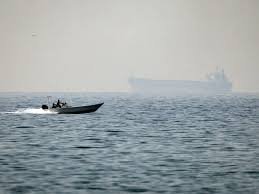
The timing is catastrophic for the organization. With the Strait of Hormuz largely paralysed by the ongoing Iran war, OPEC’s ability to stabilize prices is already compromised. While the wider OPEC+ alliance still controls a significant portion of output, the “UAE exit” follows a trend of departures; including Qatar and Angola which are driven by disagreements over output quotas. If the UAE’s departure triggers a ripple effect among other frustrated members, the cartel could transition from a global price setter to a mere political forum.
As the UAE repositions itself as an independent producer, it gains the leverage to negotiate direct bilateral deals with energy hungry giants like China and India, free from Riyadh’s oversight. Whether OPEC survives depends entirely on whether Saudi Arabia can maintain the fragile remaining alliance. Without the UAE, the organization is not just smaller, it is structurally more fragile, facing a future where national survival takes precedence over collective unity.