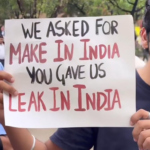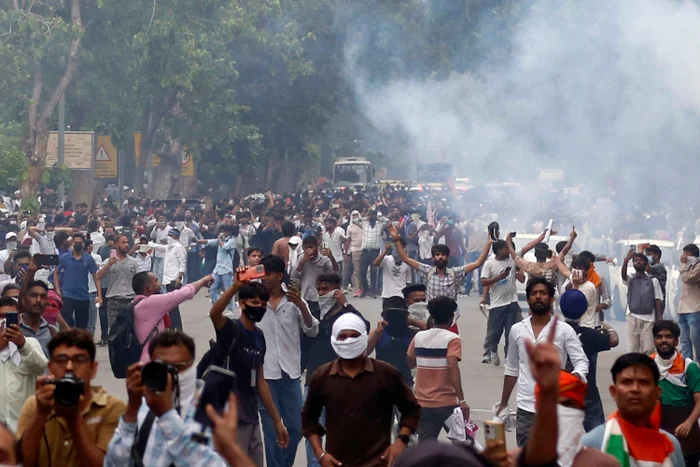
A planned march to India’s Parliament by the Cockroach Janta Party (CJP) turned into a dramatic confrontation in New Delhi after thousands of protesters defied a police ban, leading to clashes, mass detentions, and reports of internet disruptions around the protest site. What began as a movement over alleged irregularities in the NEET examination has rapidly grown into one of the most prominent youth-led protest campaigns in India in recent years.
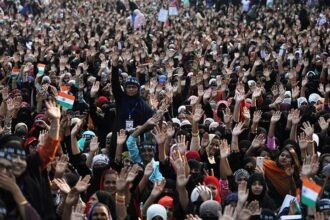
From the early hours of the day, tens of thousands of students, parents, teachers, professionals, and supporters gathered at Jantar Mantar despite heavy rain. The protesters had announced a march towards Parliament to demand the resignation of Union Education Minister Dharmendra Pradhan, arguing that the alleged examination paper leaks and irregularities exposed deeper structural failures within India’s education system.
Delhi Police had already prohibited the march and erected multiple barricades to prevent demonstrators from approaching Parliament. As protesters attempted to push through the barricades, the situation quickly escalated into scuffles. Videos and eyewitness accounts circulating online showed police carrying out lathi charges against protesters, with several demonstrators claiming they suffered injuries during the operation.
The crackdown did not stop with crowd dispersal. Police detained several senior figures associated with the movement, including Cockroach Janta Party chief Abhijeet Dipke. Among those taken into custody were actor and activist Prakash Raj and Samajwadi Party Lok Sabha member Dimple Yadav, highlighting the growing political attention surrounding the protest.
Reports also indicated internet disruptions in and around parts of the protest area, limiting communication as events unfolded. Although authorities have not publicly provided a detailed explanation for the disruptions, the reported shutdowns drew criticism from activists who argued that restricting digital communication during a major public demonstration further limited the ability of protesters and journalists to document events in real time.
The latest mobilisation follows weeks of nationwide demonstrations triggered by allegations of NEET examination paper leaks and demands for greater transparency and accountability in the country’s examination system. What initially centred on students’ concerns has since broadened into a larger movement expressing frustration over governance, accountability, and opportunities for India’s youth.
The protests gathered further momentum after environmentalist and education reform advocate Sonam Wangchuk was forcibly shifted to a hospital by police during the 21st day of his hunger strike in support of the movement. According to his family, his fast continued despite the hospitalisation. On the day of the Parliament march, Wangchuk appealed to doctors to discharge him so he could join the protesters, but he was reportedly not permitted to leave.
The events at Jantar Mantar have once again placed India’s approach to public demonstrations under intense scrutiny. Human rights advocates and opposition leaders have questioned the use of force against largely student-led demonstrators and raised concerns over restrictions on assembly, mass detentions, and reported internet shutdowns. Images of police baton charges against young protesters have fuelled wider debate over the shrinking space for peaceful dissent in the world’s largest democracy.
As political tensions continue to rise, the confrontation is likely to have consequences extending beyond the NEET controversy itself. The movement has become a symbol of broader public frustration among sections of India’s youth, while the state’s response has intensified debate over civil liberties, democratic accountability, and the treatment of peaceful protesters. Whether the government chooses dialogue or continued confrontation may shape not only the future of this movement but also the wider conversation about democratic rights in contemporary India.