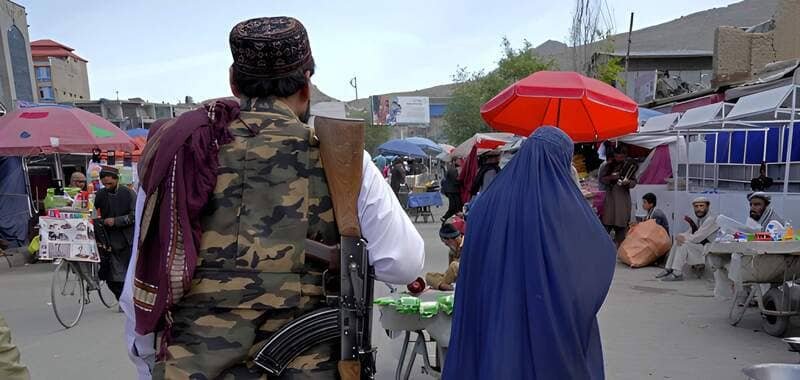
After the fall of Kabul in August 2021, the Afghan Taliban took control of Afghanistan. According to the international monitoring bodies, the Taliban regime has failed to take effective measures to curtail terrorism and ensure the stability of Afghanistan. Although, they claim to have brought order and security to the nation, but socio-economic and security landscape reveals a failure of legitimacy, security and public welfare.
There are numerous terrorist organizations operating from Afghan soil, as highlighted by the UN Security Council Monitoring Team while authenticating safe havens in Afghanistan. The Taliban regime continues to act as an ideological militant movement with providing a shield for terrorist networks like the Tehreek-e-Taliban Pakistan (TTP), apart from transitioning into a state entity. Moreover, the cross-border terrorism operating from Afghanistan is a regional concern as it has triggered a new wave of terrorism in the region. Militants using the Afghan soil carry an economic cost as well, border closure link to security concerns cost $1 million per day to the Afghan economy.
Furthermore, there is a staggering population growth of 8.6 percent in Afghanistan, largely driven by two million returned from Pakistan. The GDP per capita of Afghanistan is also shrinking, leaving millions of Afghans poorer than before. Therefore, it is in the best interest of the Afghan regime to stop providing safe havens to militants in order to secure its economy.
Moreover, there is a looming humanitarian crisis in Afghanistan that has reached at an alarming position. As of 2023, over 65 percent of Afghanistan population is multi-dimensionally poor. Food insecurity has reached to the 75 percent of the Afghan population and aid dependency has widened to 32 percent which signals a total reliance on external aid.
The systematic exclusion of women from the public life is perhaps the most significant blow to Afghanistan’s stability. Afghanistan is the most repressive country globally when it comes to the women’s rights, as only 7 percent of women are employed compared to the 84 percent of men. This gender apartheid has further pushed Afghan economy at the brink of catastrophe, as the Taliban regime has effectively halved the nation’s human capital by banning women from education and work.
Therefore, if the Taliban wants to attain economic stability then they will have to quit backing militants in Afghanistan and they should include women in public sector. As long as they prioritize ideology over the welfare of their citizens, they will isolate themselves in the region. Thus, without inclusive governance, the regime remains in a state of diplomatic and economic fragility.