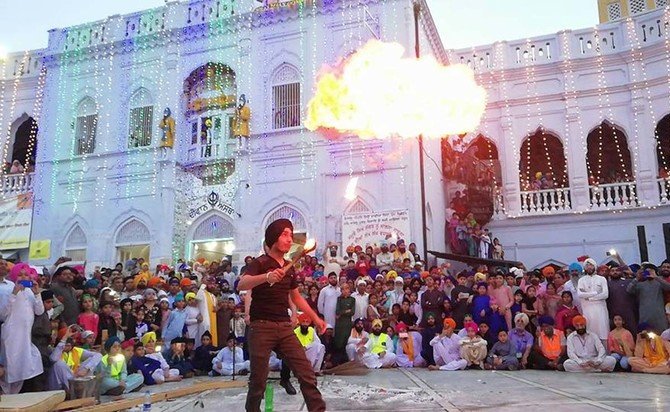
The sacred grounds of Gurdwara Panja Sahib recently transformed into amalgam of colour and spiritual energy as thousands gathered to commemorate the 327th birth anniversary of the Khalsa. Historically, Baisakhi marks the 1699 foundation of the Khalsa Panth by Guru Gobind Singh and serves as a thanksgiving festival for the spring harvest. Pilgrims from across the globe gathered to perform sacred rituals and reaffirm their connection with the land of their Gurus. This year, the festivities took on a grand scale, underscoring Pakistan’s commitment to religious freedom and its rich, multicultural tapestry.
The journey began on April 13, when over 2,200 Sikh yatrees from India crossed the Wagah border to a reception filled with warmth and respect. This significant turnout underscores Pakistan’s commitment to opening its borders for religious tourism, fostering an environment where peace and shared history take centre stage. These Baisakhi celebrations highlight faith and harvest as vital links between the past and the present.
The 10-day pilgrimage included visits to the most revered sites in Sikhism, from the historical depths of Hasan Abdal to the serene expanses of Nankana Sahib and Kartarpur Sahib. The Vaisakhi Mela is a multifaceted event, blending the solemnity of religious observance with the exuberant joy of the harvest season. Throughout the festivities, the air was filled with the rhythmic chanting of Gurbani, while the Langar halls remained open to all, embodying the Sikh principle of equality.
To ensure a seamless experience, the government of Pakistan provided high level security and premium lodging facilities for the visitors. The yatrees were vocal in their appreciation, with many describing the trip as a deeply emotional homecoming. “We came for the sites, but we are leaving with the hearts of the people here,” one visitor remarked, praising the meticulous arrangements and the genuine hospitality that defined their 10-day stay.
As the pilgrims depart today, they carry with them memories of a nation that celebrates its diversity. Reports on the religious festivities in the region emphasize that such gatherings are essential for projecting Pakistan’s true identity as a guardian of pluralism.
As the Baisakhi celebrations conclude, the event reaffirms its role as a bridge between communities, seamlessly weaving together spiritual devotion, agricultural traditions, and shared social values. By hosting such grand commemorations, Pakistan continues to honour its historical legacy while building a future rooted in mutual respect.