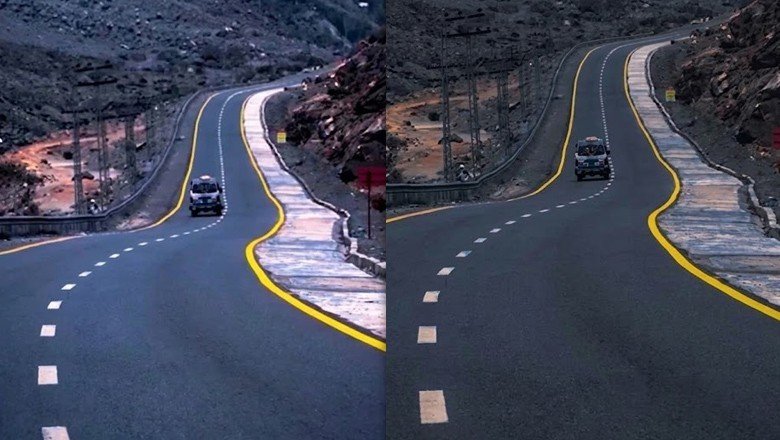
India’s ruling Bharatiya Janata Party (BJP) has come under intense criticism after its official X (formerly Twitter) account, @BJP4India, shared a video of a highway in Pakistan’s Gilgit-Baltistan while presenting it as an example of India’s infrastructure development. The post, which was later deleted, has triggered widespread backlash, with critics calling it an embarrassing lapse that reflects poorly on the party’s communication standards.
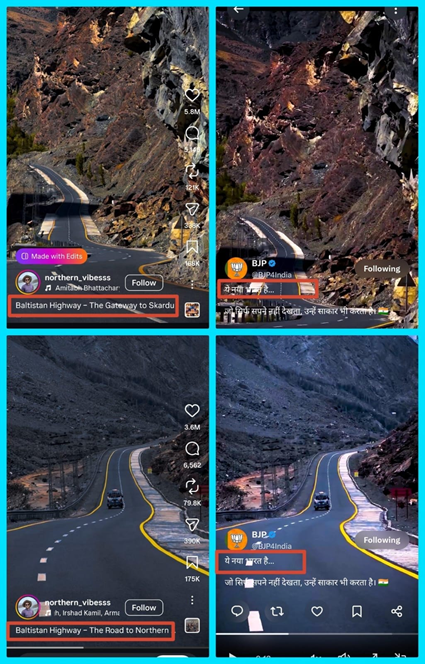
The video was posted with the caption: “This is the new India. Which doesn’t just dream, but also realises them.” It featured a scenic mountain highway intended to showcase India’s development. However, social media users quickly identified road signs in the footage reading “Gilgit-Baltistan Highway,” revealing that the road was actually in Pakistan.
Within hours, screenshots of the deleted post spread across social media, with users mocking the BJP for allegedly showcasing Pakistani infrastructure as its own. Many described the episode as highly unprofessional, arguing that a national political party with access to dedicated media and communications teams should have verified the authenticity of the footage before publishing it. Critics said the incident demonstrated a lack of due diligence and raised questions about the standards of fact-checking within the party’s digital operations.
The controversy quickly evolved beyond a simple social media blunder. Opposition supporters, journalists and independent commentators accused the BJP of attempting to claim credit for infrastructure that was not Indian, while others argued that the episode damaged the credibility of the party’s messaging on development. Even after the post was deleted, archived screenshots continued circulating online, amplifying the criticism.
The highway shown in the video is widely recognised as part of Pakistan’s Karakoram Highway, one of the world’s highest paved international roads connecting Pakistan with China through Gilgit-Baltistan. Renowned for its engineering and spectacular mountain landscape, the route is often referred to as the “Eighth Wonder of the World” and is considered one of Pakistan’s most iconic infrastructure projects.
The BJP has not publicly explained how the Pakistani footage came to be used in its promotional post. However, the silence has done little to quell criticism, with many arguing that official accounts representing a governing party carry a greater responsibility to verify every image and video before publication.
The incident has also reignited broader concerns about the quality of political communication in the digital age. With internet users now able to identify locations through road signs, satellite imagery and geolocation tools within minutes, critics say such oversights are no longer minor mistakes but serious failures that can undermine public trust.