Whether Iran War concludes or not, it will mark the beginning of a fragmented international order with no sign of return to the status quo. The conflict has triggered systemic transformation that will dictate global policy priorities in terms of security, economy and diplomacy in coming decades. Furthermore, the world will see a sharp deviation from previous trajectories of growth and cooperation to the energy instability and erosion of traditional alliances.
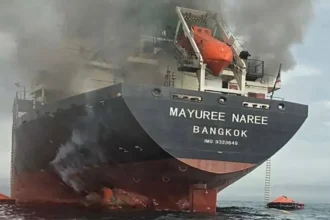
The most visceral impact of the Middle Eastern conflict is the instability of global energy markets. According to the International energy Agency, it is the largest energy supply disruption in history that has destroyed critical infrastructure, choked oil shipments and sent prices soaring.
The consequences of the conflict are staggering for the underdeveloped states. According to the United Nations Developmental Program (UNDP), energy costs, food insecurity and stagnant growth can push 32 million people into poverty. Moreover, International Monetary Fund (IMF) has warned that this conflict can cause permanent scarring of the global economy, with high inflation and constant threat of economic depression.
Israel is now completely exposed after this all-out war with Iran. From its operations in Gaza to the strikes in Iran, it is now facing complete isolation. European allies have pivoted completed from backing Zionist state. Spain has imposed arms embargos, Italy has completely ended up its relations and France has suspended military cooperation. Even within the United States, the public opinion has shifted drastically, expressing hatred towards Tel Aviv.
The conflict has also widened the tensions within the transatlantic alliance. The war initiated by the US without taking in confidence the European allies, followed by President Trump’s threats to abandon NATO has shattered trust. Therefore, this might end the era of Western monolithic foreign policy.
This conflict has also altered the strategic equation in the Middle East, with the US losing its credibility. For decades, the Gulf States have relied upon the US security umbrella, but the war has demonstrated that the US prioritizes interests of Israel over regional stability, making the Gulf States vulnerable.
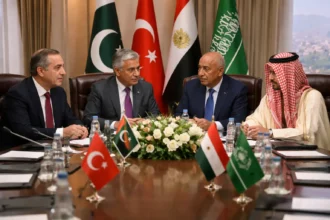
Consequently, the Arab nations have begun to diversify their security arrangements. For instance, Saudi Arabia has signed defense agreement with Pakistan and Qatar is also willing to have a defense treaty with Pakistan.
Although, Iran suffered huge losses in the war but it has also a strategic leverage. It has proved its capacity to control the Strait of Hormuz which definitely gives it a seat at the table. This can be factor that the Gulf state can prioritize cooperation with Iran for regional normalization over external dependence.
Therefore, the Iran’s unmatched resistance has accelerated the decline of American regional dominance. This shows that multi-polarity is the new reality, as the global landscape is becoming one defined not by single power hegemony.