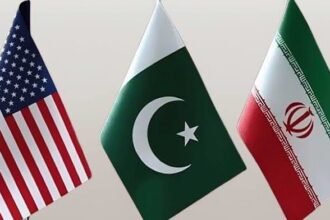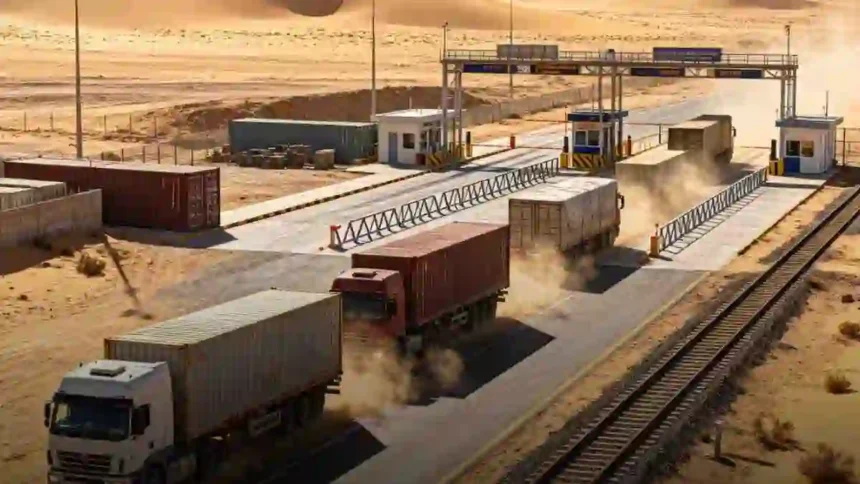
In a move that fundamentally reshapes the regional trade architecture, Pakistan has officially activated six overland corridors to facilitate the transit of third country goods into Iran. While the decision is a direct response to the crippling maritime blockades in the Strait of Hormuz, its long term implications signal a decisive shift in how Islamabad intends to manage its borders and its neighbours. This formalization comes via the Transit of Goods through Territory of Pakistan Order 2026, a statutory regulatory order announced by the Ministry of Commerce at a moment of acute regional crisis.
Bypassing the Maritime Siege
The timing of this policy is critical as more than 3,000 containers destined for Iran currently sit stranded at Karachi port due to the effectively paralysed Strait of Hormuz. With this chokepoint, which typically handles one fifth of global oil and gas, restricted amid the ongoing U.S. Iran conflict, these six approved routes carve through the heart of Balochistan to serve as Iran’s primary terrestrial lung. The corridors utilize key routes such as the southern link from Gwadar to Gabd and the mainline connecting Karachi and Port Qasim to Taftan via Khuzdar and Dalbandin. Additionally, the government has authorized hybrid routes that integrate Gwadar with Quetta and Turbat to ensure maximum flexibility. To ensure compliance and protect domestic interests, traders are required to submit a cashable financial guarantee equivalent to Pakistan’s applicable import levies as customs security before any cargo is permitted to move.
The Kabul Factor: A Diplomatic Cold Front
Beyond the immediate relief for Tehran, the opening of these corridors sends a stark message to Kabul regarding the current diplomatic cold front. As border skirmishes persist along the North-Western and South-Western frontiers, the diplomatic “reset switch” between Pakistan and Afghanistan remains firmly out of reach. For years, Kabul has sought to reduce its reliance on Pakistani ports by pivoting toward Central Asian and Iranian corridors, but Islamabad has now flipped the strategic equation entirely. By establishing direct and reliable land links to West Asia, Pakistan can effectively bypass Afghan territory for its own westbound trade, a manoeuvre that threatens to erode Kabul’s status as a regional transit hub and deprives the Afghan administration of vital transit revenue.
Architect of a New Eurasian Gateway
This rerouting is more than a temporary fix for a naval blockade; it is a calculated bid for regional indispensability within a shifting Eurasian trade order. By opening these corridors, Pakistan is reducing its own dependence on volatile Gulf maritime routes and positioning itself as the central overland gateway for China backed trade into the rest of the world. As infrastructure investment pours into these Balochistan arteries, the direction of travel is clear: Islamabad is consolidating a trade order that prioritizes direct access to Iran and the West. In this new geopolitical reality, Pakistan is proving it can navigate the complexities of a global conflict while simultaneously outmanoeuvring regional rivals, with or without Kabul’s cooperation.