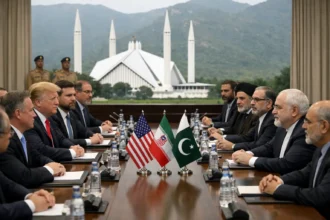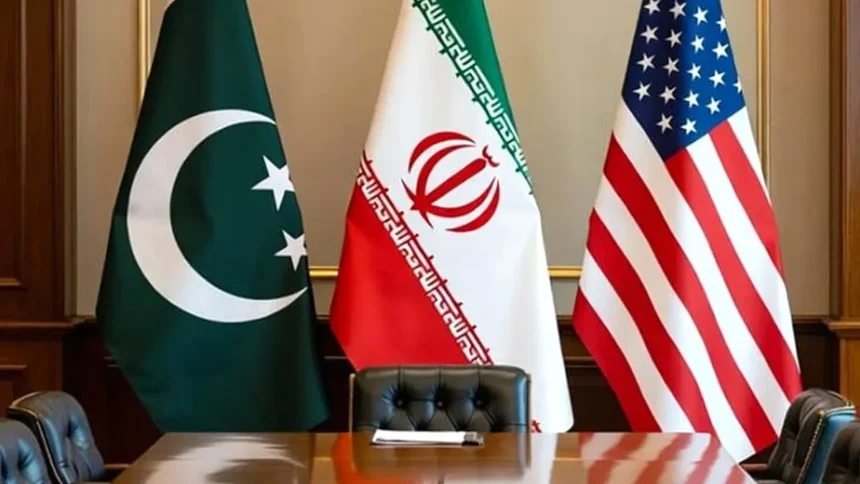
The dawn of April 8, 2026, marks a pivotal shift in global geopolitics as a catastrophic military escalation was averted hours before a critical deadline. Following intensive mediation led by Islamabad, Washington and Tehran have formally agreed to the Islamabad Framework, a 14-day provisional ceasefire that offers a high stakes window for a permanent diplomatic settlement. This agreement centres on the immediate reopening of the Strait of Hormuz, with Iranian authorities committing to facilitate safe passage for a massive maritime backlog; estimated at over 200 stranded tankers that destabilized global energy security for six weeks. In exchange, the U.S. has paused its ultimatum of targeted strikes against Iran’s petrochemical and power infrastructure, setting the stage for the Islamabad Summit scheduled for Friday, April 10.
This breakthrough represents a historical moment for Pakistan’s diplomacy, successfully positioning the nation as the indispensable “bridge” between two global adversaries at the eleventh hour. By leveraging a unique combination of military-to-military backchannels and sophisticated shuttle diplomacy, Pakistan managed to secure a commitment to peace just ninety minutes before the deadline. This achievement is particularly significant as it solidifies Islamabad’s agency as a major diplomatic force, defying sceptics by synthesizing a complex 15-point U.S. proposal and an Iranian counter-plan into a workable truce. For a nation acting as the sole trusted communication channel, this is a major victory for “principled diplomacy” and regional stability.
The direct public commitments from key leaders, signal a genuine tactical pivot away from the brink of total regional war. Taking to X, Prime Minister Shehbaz Sharif announced the breakthrough, stating, “I warmly welcome the sagacious gesture and extend deepest gratitude to the leadership of both countries. We earnestly hope that the ‘Islamabad Talks’ succeed in achieving sustainable peace.” This sentiment was echoed by President Donald Trump, who confirmed the pause on Truth Social. The President noted that “based on conversations with Prime Minister Shehbaz Sharif and Field Marshal Asim Munir… I have agreed to suspend the bombing… subject to the COMPLETE, IMMEDIATE, and SAFE OPENING of the Strait of Hormuz. This will be a double-sided CEASEFIRE!”
This points to Tehran’s compliance and acknowledging Pakistan’s indispensable role in bridging the communication gap, Foreign Minister Abbas Araghchi also posted on X, confirming that “for a period of two weeks, safe passage through the Strait of Hormuz will be possible via coordination with Iran’s Armed Forces… we express gratitude to our dear brothers PM Sharif and Field Marshal Munir for their tireless efforts.”
While global markets responded with immediate relief causing Brent and WTI crude prices to plummet by 15% to below $100 per barrel. The durability of the truce remains under observation. Although Pakistan’s leadership has framed the ceasefire as all encompassing, conflicting reports regarding continued operations in Lebanon suggest that managing regional proxies remains the framework’s most significant challenge as the world turns its attention to the Friday summit to see if this tactical pause can be forged into a lasting security architecture.