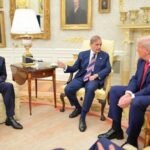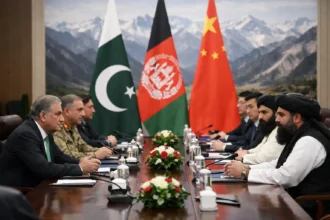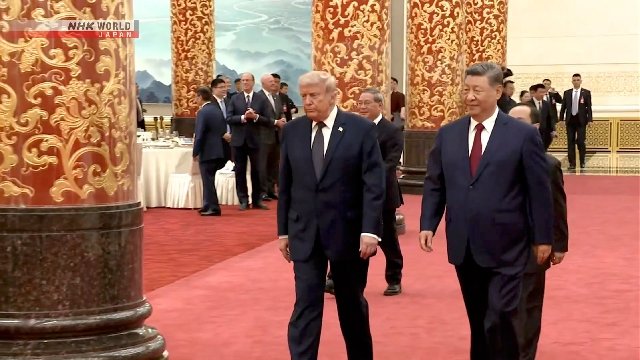
President Donald trump’s visit to China marks a significant pivot in global trade and bilateral relations. Following high-level engagement in Beijing, the Trump administration has characterized the summit as a major success with the finalization of substantial trade agreements intended to re-evaluate the growing economic rivalry between the world’s largest economies.
The summit was aimed at addressing long-standing grievances regarding trade deficit and market access. Both President Xi Jinping and President Trump gave a signal of a fantastic trade deals which appeared to prioritize a pragmatic economic truce. This meeting highlights a desire to stabilize global economy that has been shaken by previous cycles of tension and tariffs. Both nations reportedly focused on a temporary reprieve over the adversarial rhetoric that has dominated in recent years over energy, agriculture and manufacturing.
In order to understand the significance of this visit, one must has to go through the lens of historical Presidential trips to China. Since the historic rapprochement of in 1970s, that led to the restoration of diplomatic harmony between the US and China. From President Nixon’s groundbreaking 1972 arrival in China to the contemporary era, these summits have always acted in between public optics and private friction.
Historically, these high-stakes meetings are not merely about trade, instead they are held in order to navigate the fundamental ideological differences between a liberal democracy and a socialist state. There are starch differences regarding the geopolitical influence, mainly in the Indo-Pacific region, and domestic policies of both states are in contrast to one another, but trade often provides a convenient common ground.
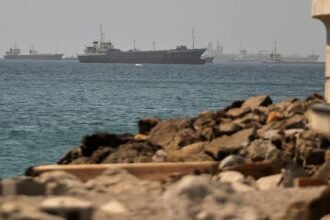
Moreover, President Trump signaled that he managed to secure a fantastic deal over agriculture, artificial intelligence and aviation. He also stated that he took President Xi in confidence regarding Iran conflict, that China will not support Iran militarily over controlling the Strait of Hormuz. In the context of Taiwan, the policy remains unshaken as both leaders choose silence over the Taiwan issue.
World is on the precipice of economic catastrophe because of growing number of regional conflicts. Inflation has skyrocketed after the Ukraine war and now multiplied by the Middle Eastern crisis. Let us hope that this summit bears some fruits and gives some relief to the world population.
Therefore, this summit suggests a period of tactical cooperation. However, the true test of these fantastic deals lies in their implementation. The durability of the peace brokered depends on whether both states can move beyond transactional wins toward a more sustainable and predictable strategic framework. In addition to it, President Donald Trump is about to face mid-term elections for that he needs to show some economic success as well.