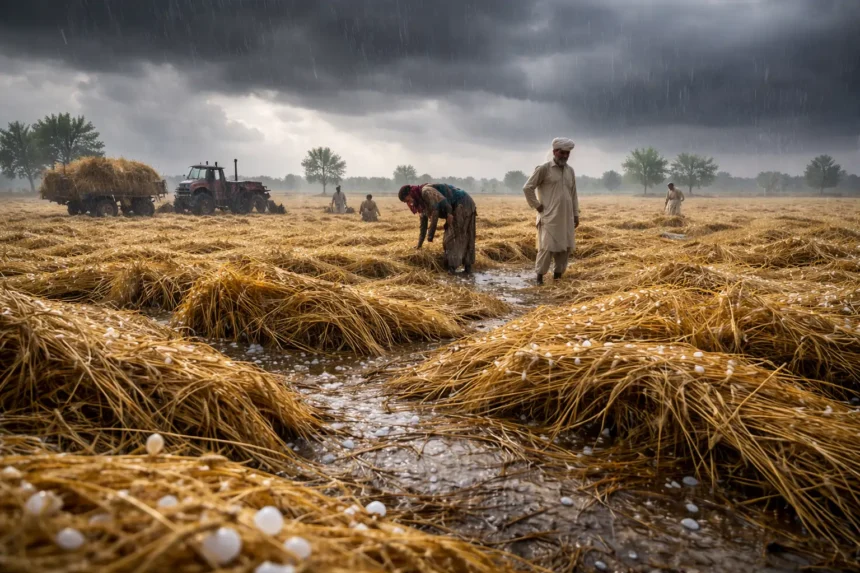
As the month of April; the traditional “Golden Harvest” season settles over Pakistan’s agricultural heartland, farmers are facing a meteorological nightmare. What should have been a period of dry heat essential for ripening of crop has instead turned into a cycle of unseasonal rains, gusty winds, and devastating hailstorms.
According to recent reports, the sudden shift in weather patterns has flattened standing wheat crops at a critical stage. For farmers the timing could not be worse; wheat stalks ready for harvest have been forced to the ground by heavy showers, a phenomenon known as “lodging”, which makes mechanical harvesting nearly impossible and exposes the grain to moisture damage (READ MORE). The Pakistan Meteorological Department warns that a strong westerly weather system is likely to persist across Punjab until mid of April.
While the “Wheat Belt” of Punjab (especially areas like Sargodha, Multan, and Layyah) has faced the most visible flattening of crops, the impact elsewhere is equally severe. In Sindh, showers threaten remaining standing crops and open air stocks, while in Balochistan and Khyber Pakhtunkhwa, flash floods and landslides have also disrupted the harvest.
The implications of this weather erraticism extend far beyond the farm. Agricultural experts warn that the moisture will not only lead to grain quality deterioration but will likely cause significant yield losses. This supply shock might ripple through the economy, potentially triggering a sharp increase in flour prices. As the availability of the high quality wheat shrinks, market stakeholders anticipate that millers and consumers will face higher costs for the country’s primary staple.
With climate change making these unseasonal events a recurring threat, the traditional agricultural calendar is being rendered obsolete. If the rains continue, the moisture content in the grain will lead to sprouting and fungal infections, further devaluing the crop. For a country with high food inflation, these clouds carry a heavy price, turning the “Golden Harvest” into a desperate race against the elements.