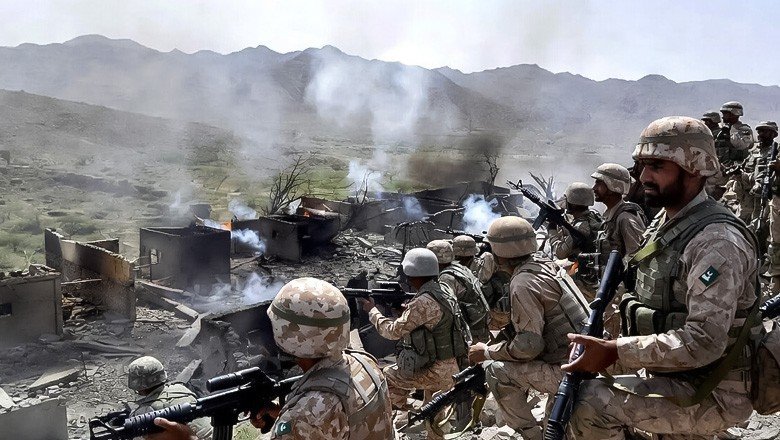
According to the data released by Pakistan Institute for Conflict and Security Studies (PICSS), internal security landscape of Pakistan has witnessed significant improvement in last two month with steady decline in terrorist activities and fatalities. The reports stated that April marked the second consecutive month of improved security indicators. This decline in militancy is attributed to the robust military campaign with the launch of Operation Ghazab-lil-Haq in late February 2026.
The frequency and lethality of the violent activities marked a clear reduction in the month of April. There were over 85 militant attacks in the month, as of PICSS, representing a 42 percent drop compared to the 146 incidents recorded in the previous month. This follows a downward trend that began immediately after the launch of operation after the peak violence in early 2026. There is also an obvious decline in the number of fatalities, falling from 106 in March to 60 in April. Moreover, the number of security personnel martyred in these attacks has also significantly by 53 percent, from 59 to 28. This shows that the policy of punitive punishment adopted by the armed forces has not only reduced the capacity of militants to strike, but it has also improved the security of the forces on the front lines.
The water shed moment in Pakistan’s security turmoil was the launch of Operation Ghazab-lil-Haq in February 26, 2026. The operation was initiated following a series of unprovoked cross-border terror attacks and suicide bombings, including suicide bomb blasts in Imam Bargah in Islamabad, within Islamabad. This operation is characterized by its intelligence based and selective surgical strikes against terrorist sanctuaries within Afghanistan. The precision strikes were carried out against key camps and hideouts belonging to the banned Tehreek-e-Taliban Pakistan (TTP), also referred as Fitnah al-Khawarij, and the Islamic State-Khorasan Province (ISKP). By quitting policy of appeasement and adopting punitive punishment, the Pakistan Army has managed to disrupt the command and control structures of these non-state actors.
Although the numbers of militant attacks have decreased, yet the security forces have intensified their operations. The total number of combat related deaths stood at 291 in April alone. Out of these, 77 percent were militants. The significantly higher ratio of the militant deaths over the security personnel and civilians clearly indicate the precision and accuracy in recent military engagements. The most significant improvement is observed in Tribal areas and in Khyber Pakhtunkhwa which have remained the epicenter of terrorist activities.
Therefore, the continuous decline in the militancy is a glimpse for the nation long plagued in instability. The success of the Ghazab-lil-Haq demonstrates that a proactive military response with proper intelligence led precision can effectively eradicate the menace of terrorism from Pakistan. Although, the frequency of the terror attacks has dropped, yet there is a persistent threat and the open war declared against cross-border terror hideouts requires sustained vigilance. For Pakistan, the decline in militancy is a necessary step toward permanent peace and economic stability.