The May 2025 conflict between India and Pakistan stands as a watershed moment in history. The five day military escalation, from May 6 to May 10, 2025, pushed nuclear powers to the brink of an all-out war, involving drones, missiles and high-altitude aerial dogfight.
The conflict was escalated after a terror attack in Pahalgam in Indian Occupied Kashmir on April 22, 2025, claiming the lives of 22 civilians. The Modi regime immediately pointed fingers at Islamabad, a claim that Pakistan denied, citing a lack of evidence. Following this incident, tensions reached a boiling point on May 6 which Pakistan’s armed forced concluded that a clash was imminent.
As the pressure mounted, India launched Operation Sindoor on the night of May 7, a series of missile and air strikes were carried out on civilian areas and mosques in Punjab and Azad Kashmir, which India claimed to be militant infrastructures.
The conflict escalated rapidly into the skies. A dogfight never seen before in history, Pakistan Air Force (PAF) reportedly short down seven fighter jets of Indian Air Force (IAF), including three Rafales. After facing unprecedented response from Pakistan, India went for a massive drone offensive. On May 8 and 9, India launched dozens of Israeli made Harop suicide drones which were successfully intercepted by Pakistan’s defense system.
As a measure of further escalation, conflict was not limited to air. On the night of May 9, India launched Brahmos missiles to target PAF bases of Rawalpindi, Chakwal and Shorkot. As a measure to counter this lethal offense, Pakistan responded with Operation Bunyan-um-Marsoos, with an objective of striking defense sites in India and Indian Occupied Kashmir. As a result of these strikes, Pakistan successfully managed to destroy S-400 missile system in Adampur and Brahmos missile storage in Beas.
The ceasefire was announced on May 10 after the successful mediation by the United States under the Trump administration, but the conflict took a heavy toll on regional stability. India placed the Indus water Treaty signed in 1960 in abeyance with closing dams such as Baglihar dam.
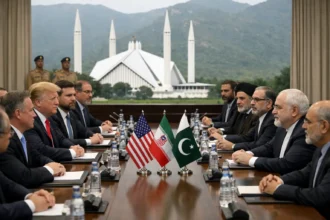
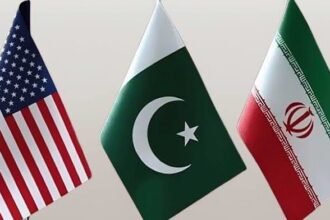
A year later, it is analyzed that the conflict has lowered the threshold for future confrontation between the hostile neighbors. Although the ceasefire is in place, yet the suspension of water treaty and the lack of formal diplomatic dialogue remained a point of concern. This war has also changed the perception of Pakistan for the region and beyond. It has raised the stature of Pakistan to the net security provider for the region. For instance, it played a key role as a mediator in Iran-US conflict which would not be possible without success of Marka-i-Haq.