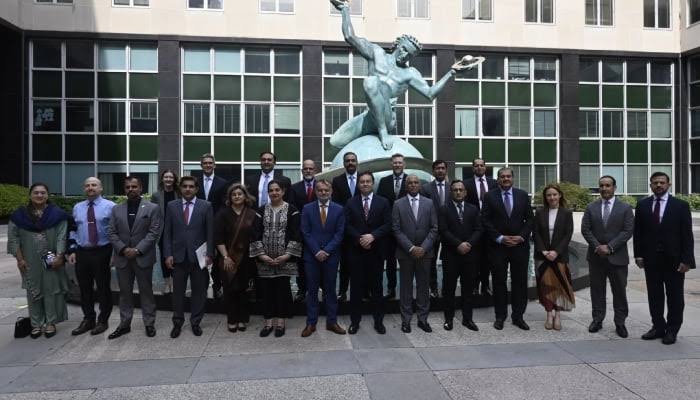
Pakistan and the United States have reaffirmed their commitment to strengthening counter-terrorism cooperation following the fourth Pakistan–US Counter-Terrorism Dialogue held in Washington. The high-level meeting signaled a renewed focus on tackling shared security threats through intelligence cooperation, border security, and coordinated efforts against transnational terrorist networks.
The dialogue was led by US Coordinator for Counterterrorism Ambassador Gregory LoGerfo and Pakistan’s Foreign Ministry Special Secretary Ambassador Nabeel Munir. According to a joint statement issued after the talks, both sides underscored the enduring importance of their counter-terrorism partnership and reiterated their determination to confront extremist organisations that threaten regional and global security.
During the discussions, officials reviewed the evolving terrorist threat landscape and explored practical measures to deepen bilateral cooperation. Particular emphasis was placed on strengthening border security, disrupting terrorist financing and facilitation networks, and enhancing information sharing between the two countries.
The two delegations identified several militant organisations that continue to pose serious security challenges, including ISIS-Khorasan (ISIS-K), Al Qaeda, Tehreek-i-Taliban Pakistan (TTP), and the Balochistan Liberation Army (BLA) along with its affiliated groups. Both governments affirmed their joint resolve to combat these organisations and prevent them from undermining regional stability.
The joint statement stressed that the United States and Pakistan remain committed to ensuring that their counter-terrorism collaboration contributes not only to the safety of their respective citizens but also to a broader vision of regional peace, prosperity, and long-term stability. Pakistan’s Foreign Office further noted that both sides held extensive deliberations on regional and global terrorist threats and pledged to strengthen cooperation at both bilateral and multilateral levels.
The dialogue comes at a significant time for bilateral relations. Following the withdrawal of US forces from Afghanistan in 2021, security cooperation between Washington and Islamabad entered a period of uncertainty, with both countries expressing differing concerns over regional security dynamics. However, recent engagements suggest that counter-terrorism has once again emerged as an area of mutual strategic interest despite broader geopolitical shifts.
For Pakistan, enhanced cooperation is particularly important as the country continues to face an uptick in terrorist violence. Cross-border militancy, attacks on security personnel, and the activities of extremist organisations remain major challenges to national security. By expanding intelligence sharing and operational coordination with international partners, Pakistan seeks to strengthen its capacity to counter evolving terrorist threats while contributing to wider regional security efforts.
For the United States, continued engagement with Pakistan reflects recognition of the country’s strategic importance in South Asia and its role in preventing terrorist groups from exploiting regional instability. Effective cooperation with Pakistan remains a key component of broader international efforts to contain transnational terrorist organisations operating in and around the Afghanistan-Pakistan region.
The fourth Pakistan–US Counter-Terrorism Dialogue demonstrates that despite differences on other policy issues, both countries continue to view counter-terrorism as a critical pillar of their bilateral relationship. As extremist threats become increasingly complex and interconnected, sustained cooperation between Islamabad and Washington will remain essential for promoting regional security, safeguarding national interests, and preventing terrorist organisations from exploiting emerging security gaps.