The Indus ReportThe Indus ReportThe Indus Report
Notification Show More
Font ResizerAa
  • Home
  • News
    • Pakistan
    • India
    • Middle East
    • America
    • Europe
  • Opinion
    • Analyses
    • Reviews
  • Economy and Business
    • Market Reports
    • Jobs
    • Inflation
    • Human Development Indicators
  • Tech
    • AI
    • ⁠Innovation
    • ⁠Industry
  • Lifestyle
    • Culture
    • Entertainment
    • ⁠Celebrity
  • Privacy Policy
  • About Us
  • Contact us
Font ResizerAa
The Indus ReportThe Indus Report
  • My Saves
  • My Interests
  • My Feed
  • History
Search
  • Home
  • News
    • Pakistan
    • India
    • Middle East
    • America
    • Europe
  • Opinion
    • Analyses
    • Reviews
  • Economy and Business
    • Market Reports
    • Jobs
    • Inflation
    • Human Development Indicators
  • Tech
    • AI
    • ⁠Innovation
    • ⁠Industry
  • Lifestyle
    • Culture
    • Entertainment
    • ⁠Celebrity
  • Privacy Policy
  • About Us
  • Contact us
Have an existing account? Sign In
Follow US
© 2026 THE INDUS REPORT Network. All Rights Reserved.

Home - Blog - Latest - News - India - Title: The Strategic Politics of the Indus Waters Treaty

IndiaNewsPakistan

Title: The Strategic Politics of the Indus Waters Treaty

Bilal Akram
Last updated: July 9, 2026 6:56 am
Bilal Akram
Share
ChatGPT Image Jul 9 2026 11 54 27 AM
SHARE

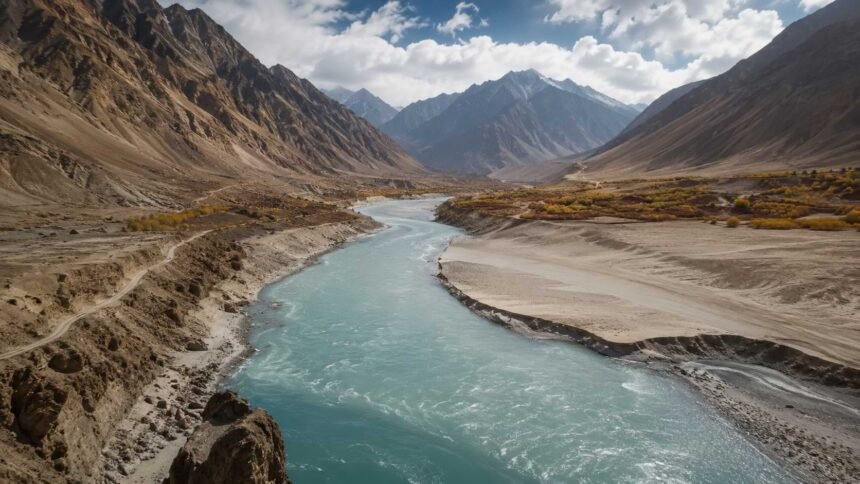
One important approach that can be adopted in understanding the disproportionate nature of the conflicts arising from the Indus, Nile, and Mesopotamian basin river systems in relation to their purely economic value is the theory of hydraulic civilizations, which was developed by Karl Wittfogel as an approach that can be used in explaining societies where politics and economics have been built around major water control systems. These rivers are more than just sources of water, as they have been at the center of agriculture and culture for thousands of years.

The Indus Waters Treaty of 1960, which awarded ownership of the western rivers to Pakistan and of the eastern rivers to India, has been extremely resilient and has survived two wars fought between the parties to the treaty, something that few treaties can claim. Nevertheless, India’s clear intent to question the dispute resolution mechanism provided by the treaty, and specifically Indian hydroelectric power plants constructed on the rivers Kishanganga and Ratle that Pakistan alleges to contravene non-obstruction provisions of the treaty, form the crux of recent disputes. From the Pakistani perspective, the problem under consideration is not a mere technical dispute, but an attempt to reinterpret an already agreed upon document outside its own procedure. The distinction is justified in Pakistan by the doctrine of estoppel, according to which India’s 55 year old practice of compliance with decisions of the neutral expert cannot be questioned.

What is more important in an analytic sense is not the legality of such claims, which is outside the scope of this article, but the multi-level approach adopted by Pakistan to bolster its position. As far as law is concerned, this requires making the decision of the Neutral Expert the sole legal option to make sure that India will not be able to find another location that suits it better. What concerns diplomacy, this implies putting pressure on the World Bank, another signatory of the agreement, and on major countries that can influence it. A useful example could be cited in the dispute that has emerged between Egypt and Ethiopia concerning the construction of the Grand Ethiopian Renaissance Dam on the Nile River. This is an example of how Egypt, through its civilizational claims, has succeeded in transforming rhetoric into legally binding claims.

However, one must exercise great care when applying this particular point of comparison. In both cases, there are asymmetrical claims by downstream countries against upstream developments, and although this comparison serves an analytical purpose, it is essential that it does not detract from the point that India’s own stance, which centers on sovereign rights to build infrastructural developments in rivers on Indian Territory, would be equally legalistic in nature. Any analysis of the future course of the dispute will depend on how well either side succeeds in institutionalizing their respective narratives in international forums.
Share This Article
Email Copy Link Print
Previous Article 30114053c847b7c The Geopolitics of the Indus: Why the Treaty Matters Now
Next Article 000 1CQ0QC Pakistan Draws a Line against Cross-Border Terrorism
Leave a Comment

Leave a Reply Cancel reply

Your email address will not be published. Required fields are marked *

Your Trusted Source for Accurate and Timely Updates!

Our commitment to accuracy, impartiality, and delivering breaking news as it happens has earned us the trust of a vast audience. Stay ahead with real-time updates on the latest events, trends.
FacebookLike
XFollow
InstagramFollow

You Might Also Like

The Beginning of the End: Can OPEC Survive the UAE’s Exit?
Middle EastMarket Reports

The Beginning of the End: Can OPEC Survive the UAE’s Exit?

By
Hajra Asad
UNSC Debate on Pakistan’s Afghanistan Strikes: Operation Ghazab Lil Haq and the Right to Self-Defense Under Article 51
AnalysesLatestNews

UNSC Debate on Pakistan’s Afghanistan Strikes: Operation Ghazab Lil Haq and the Right to Self-Defense Under Article 51

By
TheIndusReport
Karachi Grapples with Unexpected April Rain Emergency
Pakistan

Karachi Grapples with Unexpected April Rain Emergency

By
TheIndusReport
Islamabad Framework 2026: Pakistan Brokers Historic US-Iran Ceasefire
NewsMiddle EastPakistan

Islamabad Framework 2026: Pakistan Brokers Historic US-Iran Ceasefire

By
TheIndusReport
The Indus Report
Facebook Twitter Instagram

The Indus Report delivers global news, entertainment, viral trends, and fashion updates with accuracy, clarity, and a modern digital perspective.

Top Categories
  • Economy and Business
  • Lifestyle
  • News
  • Opinion
  • Tech
Support & Terms
  • About Us
  • Contact us
  • Privacy Policy
  • Terms and Conditions
  • Editorial Policy
  • Write For Us
  • Authors

©2026 THE INDUS REPORT Network. All Rights Reserved.

2026 The Indus Report Network. All Rights Reserved.
Welcome Back!

Sign in to your account

Username or Email Address
Password

Lost your password?