The Indus ReportThe Indus ReportThe Indus Report
Notification Show More
Font ResizerAa
  • Home
  • News
    • Pakistan
    • India
    • Middle East
    • America
    • Europe
  • Opinion
    • Analyses
    • Reviews
  • Economy and Business
    • Market Reports
    • Jobs
    • Inflation
    • Human Development Indicators
  • Tech
    • AI
    • ⁠Innovation
    • ⁠Industry
  • Lifestyle
    • Culture
    • Entertainment
    • ⁠Celebrity
  • Privacy Policy
  • About Us
  • Contact us
Font ResizerAa
The Indus ReportThe Indus Report
  • My Saves
  • My Interests
  • My Feed
  • History
Search
  • Home
  • News
    • Pakistan
    • India
    • Middle East
    • America
    • Europe
  • Opinion
    • Analyses
    • Reviews
  • Economy and Business
    • Market Reports
    • Jobs
    • Inflation
    • Human Development Indicators
  • Tech
    • AI
    • ⁠Innovation
    • ⁠Industry
  • Lifestyle
    • Culture
    • Entertainment
    • ⁠Celebrity
  • Privacy Policy
  • About Us
  • Contact us
Have an existing account? Sign In
Follow US
© 2026 THE INDUS REPORT Network. All Rights Reserved.

Home - Blog - Latest - News - India - India’s Moral Crisis Runs Deeper Than Politics

India

India’s Moral Crisis Runs Deeper Than Politics

Hajra Asad
Last updated: July 13, 2026 8:04 pm
Hajra Asad
Share
images 5 1
SHARE

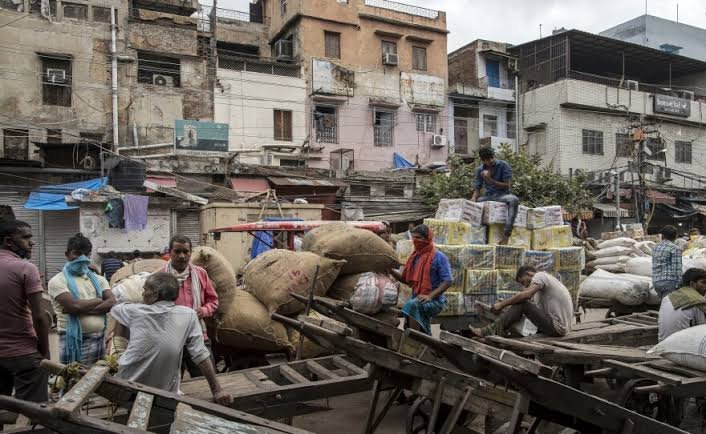
India today can easily look like a success story written in real-time data and soaring market indices. From the tech hubs of Bengaluru to the startup booms reshaping urban landscapes, the external facade suggests a nation accelerating into the future. But look beneath the digital canopy, past the financial analyst reports and the high-octane political theatre, and a much darker reality emerges. India is gripped by a profound moral existentialism—a structural decay that runs far deeper than the fortunes of any political party or the outcome of any election cycle.

The symptoms of this crisis are everywhere, woven into the very fabric of daily life. The country has increasingly become a cranky, choleric, and confounded cauldron where divisiveness is weaponized and hate cells are permitted to metastasize, quietly corroding the inner being of the republic. Those who dare to point out this collective regression often find themselves systematically silenced—facing lawsuits, imprisonment, or the constant, suffocating fear of retribution. In the rush toward modernity, the society has allowed chaos to become the new normal, surrendering to a seemingly ineluctable decline of the soul.

At the heart of this decay is a tragedy of historical amnesia: the systematic abandonment of the foundational principles of non-violence and pluralism. Decades after the assassination of Mahatma Gandhi, the principles he stood for are being discarded in his own homeland. This moral vacuum is particularly stark on the global stage. In a fractured international landscape—where modern humanitarian crises and conflict demand an empathetic, inclusive voice to remind the world that cyclical vengeance only leads to total blindness—the traditional land of peaceful resistance has largely fallen silent.

The peak of this political theater was visible during the fiercely contested summer elections of 2024. Western journalists sipped cutting chai at highway dhabas, capturing the dusty fragrance of a bitterly fought democratic festival. Social media witnessed an uncivil war, hashtag trends wrestled in the ugly filth, and families experienced painful, tension-soaked conflicts over dinner tables. But elections only decide who holds power; they do not heal a fractured national psyche.

The true battle for India’s future will not be won in parliament or on the stock market floors. It is being written by millions of unknown faces from Kashmir to Kanyakumari, from Kutch to Kibithu. The ultimate banister for Indian democracy remains its salient, stubborn diversity.

To move forward sustainably, it is necessary to look backward. The answers to modern polarization do not lie in newer tech infrastructure or harsher legal crackdowns, but in rediscovering forgotten spaces of shared history. Escaping this institutional decline requires looking past the breakneck pace of urban commercialism and actively remembering the core values of compassion, tolerance, and empathy that originally scripted the independent nation.


Share This Article
Email Copy Link Print
Previous Article images 2 Australia’s Uranium Deal With India – A Harder Question Underneath
Next Article Activists demanding an end to human rights violations in Kashmir during a protest in central London scaled 1 13 July Kashmir Martyrs’ Day: The Sacred Spark of the Freedom Movement
Leave a Comment

Leave a Reply Cancel reply

Your email address will not be published. Required fields are marked *

Your Trusted Source for Accurate and Timely Updates!

Our commitment to accuracy, impartiality, and delivering breaking news as it happens has earned us the trust of a vast audience. Stay ahead with real-time updates on the latest events, trends.
FacebookLike
XFollow
InstagramFollow

You Might Also Like

Why India’s Chabahar Port Funding Pause Sparks Strategic Debate and How Iran Has Responded
NewsIndia

Why India’s Chabahar Port Funding Pause Sparks Strategic Debate and How Iran Has Responded

By
TheIndusReport
unnamed
IndiaNews

As Global Pressure Mounts, Amnesty Report Puts India’s Arms Exports to Israel Under Spotlight

By
Hajra Asad
ChatGPT Image Jul 9 2026 11 54 27 AM
IndiaNewsPakistan

Title: The Strategic Politics of the Indus Waters Treaty

By
Bilal Akram
Jaishankar’s aggressive statement and India’s diplomatic failure
India

Jaishankar’s aggressive statement and India’s diplomatic failure

By
TheIndusReport
The Indus Report
Facebook Twitter Instagram

The Indus Report delivers global news, entertainment, viral trends, and fashion updates with accuracy, clarity, and a modern digital perspective.

Top Categories
  • Economy and Business
  • Lifestyle
  • News
  • Opinion
  • Tech
Support & Terms
  • About Us
  • Contact us
  • Privacy Policy
  • Terms and Conditions
  • Editorial Policy
  • Write For Us
  • Authors

©2026 THE INDUS REPORT Network. All Rights Reserved.

2026 The Indus Report Network. All Rights Reserved.
Welcome Back!

Sign in to your account

Username or Email Address
Password

Lost your password?