Afghanistan carries “5,000 years of history,” and the claim holds up. The land has hosted Achaemenid satraps, Greco-Bactrian kingdoms, Buddhist monasteries, Silk Road caravans, and the courts of Timurid and Mughal rulers. Herat and Balkh were once among the great cultural capitals of Asia. But cultural depth and political continuity are not the same thing, and nowhere is that gap starker than in Afghanistan’s modern political history. The last hundred years have seen the country lurch between monarchy, republic, communism, civil war, and theocracy — often violently, often at the hands of outside powers as much as internal ones.
A Century of Regime Change
The pattern starts in 1919, when Amanullah Khan won full independence from British influence and tried to drag Afghanistan into modernity — schools for girls, a new constitution, secular reforms. It cost him his throne in 1929. What followed was a monarchy that limped along for decades, propped up by tribal balancing acts, until Zahir Shah’s cousin Daoud Khan scrapped it entirely in 1973 and declared a republic. Five years later, a Marxist coup — the Saur Revolution — brought the communists to power, triggering purges, insurgency, and ultimately the 1979 Soviet invasion. What followed was a decade of war, a Soviet withdrawal, a mujahideen civil war that reduced Kabul to rubble, and the rise of the Taliban in the mid-1990s. The 2001 US invasion toppled the Taliban but installed a fragile, foreign-backed republic that collapsed within hours in August 2021 as the Taliban walked back into Kabul.
Geography, Tribes, and Foreign Hands
None of this happened in a vacuum. Afghanistan’s geography — mountainous, landlocked, criss-crossed by valleys that isolate communities from each other — makes centralized rule difficult under the best conditions. Its population is a patchwork of Pashtun, Tajik, Hazara, Uzbek, and other groups with their own languages, loyalties, and historical grievances, so “national” governments have constantly had to negotiate legitimacy tribe by tribe and region by region. Layered on top of that is a brutal history of foreign interference: British expeditions in the 19th century, Soviet occupation in the 20th and American nation-building in the 21st, that has played pivotal role in reshaping the security calculus of the country. Each outside power arrived with its own client and its own war, and each left behind wreckage for Afghans to sort out alone.
Heritage Is Not Statehood
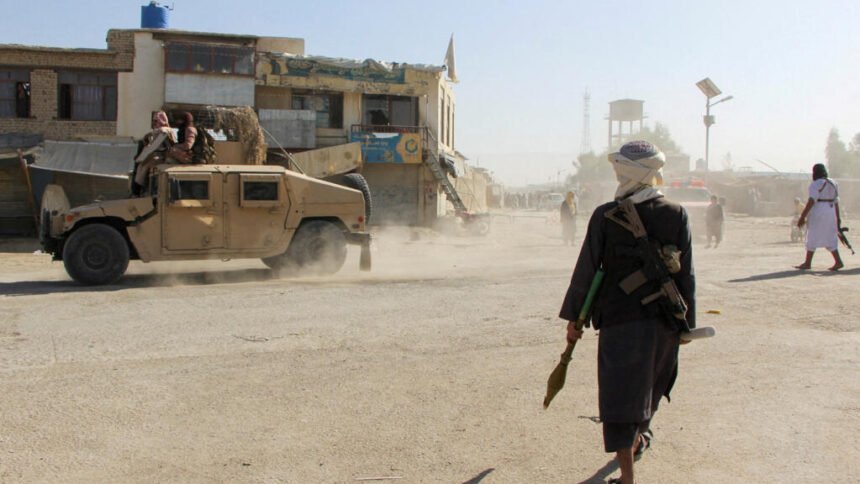
Afghanistan does not need another 5,000 years of history to prove its worth — it needs one uninterrupted generation of governance to prove it can function. The deeper rot is political, not cultural: a ruling class, in every era, that treated the state as a prize to be seized rather than a structure to be built. The current Taliban regime is the starkest example yet — a government that has banned girls from school past sixth grade, enforced draconian restrictions on women’s movement and work, and provided safe harbor to militant networks that have used Afghan soil to plan attacks abroad. Decades of harboring or tolerating extremist groups have made Afghanistan less a nation-state than a launching pad for instability, straining relations with Pakistan, Iran, and Central Asian neighbors who now treat their shared border as a security threat rather than a trade route. Until Afghanistan can survive a single peaceful transfer of power without the entire edifice collapsing — and until its rulers stop exporting chaos instead of containing it — its heritage will remain a monument to endurance, not proof of a functioning nation.