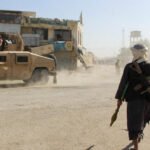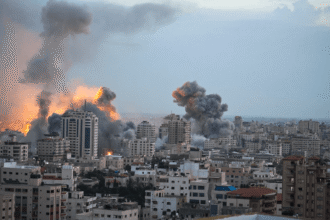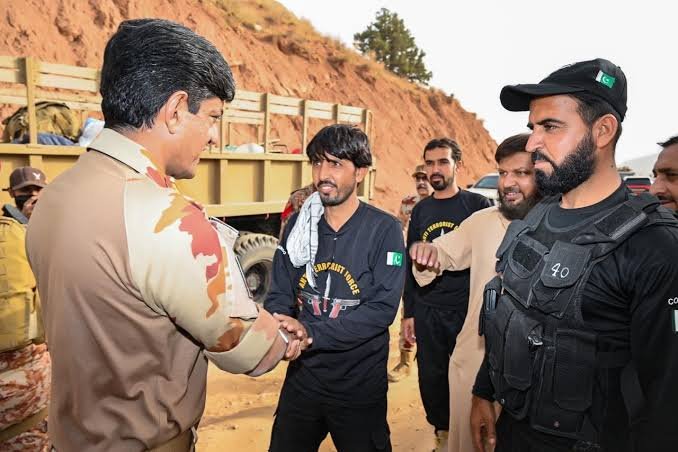
Operation Shaban is a joint counter-terrorism campaign launched in early July 2026 by the Pakistan Army, Frontier Corps (Balochistan), and Balochistan Police, targeting Fitna al-Khawarij (FAK) — the state’s designation for the banned Tehreek-e-Taliban Pakistan — and Fitna al-Hindustan (FAH), a Baloch separatist proxy network operating with foreign backing. The operation runs on two fronts: against FAK in the Pashtun-majority north around Ziarat, and against FAH-linked elements, including the Baloch Liberation Army, in the Baloch-majority south around Lasbela and Khuzdar.
The campaign follows a prolonged escalation of militant violence in Balochistan. Attacks on security forces and infrastructure in the province have mounted steadily over the past year, including a BLA ambush on a military convoy in September 2025 that killed 32 troops. That pattern continued into July 2026, when militants ambushed police personnel in the Kach Mangi Phase III area of Ziarat, killing nine police officers, including two station house officers, and abducting several civilians and policemen, who were later found killed in the Zarghoon Gar mountainous area. Days later, the BLA struck an army convoy in the Bela-Winder area of Lasbela, killing 11 soldiers in the deadliest single strike of the sequence. It was this run of attacks, culminating in the assault on the Mangi Dam Police Post, that prompted the state to launch a province-wide offensive.
ISPR Director General Lt Gen Ahmed Sharif Chaudhry said three separate attacks by FAK and FAH had claimed 42 lives — 11 soldiers, 27 police personnel and four civilians — and named India as the state sponsoring the violence.
Escalation Through July
The campaign intensified steadily through the first two weeks of July. In the initial phase, 26 militants were killed in operations on 6–7 July, with 13 more killed over the following 24 hours, bringing the toll to around 39. Security forces then repelled an attack on a police station in Khuzdar’s Zehri area, killing eight militants in the initial exchange and another five to six in follow-up helicopter-assisted operations. By mid-July, coordinated ground and aerial strikes using Pakistan Army helicopters and Pakistan Air Force assets had pushed the cumulative toll since 5 July past 100, with ISPR describing the campaign as a “large-scale air and ground offensive” continuing “with full vigour” against militant hideouts in Balochistan’s rugged, mountainous terrain. On the night of 11–12 July, a Frontier Corps block party positioned to intercept fleeing militants intercepted a group of four to six FAK/ FAH fighters travelling by motorcycle, after intelligence assessed that intensified operational pressure had forced remaining militants into small, mobile groups attempting to slip through the cordon; a firefight broke out after the group was challenged, resulting in five terrorists killed. Further engagements followed in quick succession — 21 militants killed across three separate operations in a single day, and additional strikes in the Saran Tangi area — pushing the total number of militants killed under Operation Shaban itself to roughly 75–80. With other intelligence-based operations conducted across Balochistan since 5 July factored in, the combined toll has now reached 123 terrorists eliminated. Security sources have reiterated that operations will continue until every militant network in the province is dismantled.
Arms Haul Exposes Cross-Border Support
The equipment recovered from the militants killed in the 11–12 July block-party engagement underscored the scale of external backing behind the insurgency. Security forces recovered an M4 rifle with 455 rounds, three submachine guns with 951 rounds, a rocket launcher with three rockets, an under-barrel grenade launcher, a night-vision device, four ICOM communication sets, two “Alpha” devices, two motorcycles, and a hand-held jammer.
Pakistani security officials say such equipment — modern optics, communication gear and anti-armour weapons — points to sustained material support from India and facilitation by elements operating out of Afghanistan, sustaining the proxy war being waged through FAK and FAH networks inside Balochistan.
Political Endorsement
The operation has drawn strong backing from Pakistan’s civilian and military leadership. President Asif Ali Zardari and Prime Minister Shehbaz Sharif praised the security forces for their conduct of the campaign, with Zardari saying it had once again demonstrated the forces’ capability against every threat and that national resolve remained stronger than any conspiracy against the state.
Chairing a meeting of the Provincial Apex Committee on the National Action Plan in Quetta, attended by Chief of Defence Forces and Army Chief Field Marshal Asim Munir, the prime minister said the country’s civil and military leadership had taken a “mutual and singular decision” to eliminate terrorism collectively. Interior Minister Mohsin Naqvi separately lauded the Army, FC and Balochistan Police for the operation’s execution, stating there is no place for terrorists in Pakistan.
The Road Ahead
Security sources maintain that Operation Shaban has no fixed end date and will continue until the last militant in Balochistan is eliminated. With ground and air operations ongoing in the province’s mountainous districts and cordons tightening around remaining pockets of resistance, officials describe the campaign as entering a sustained phase aimed at dismantling FAK and FAH networks entirely, addressing years of accumulated militant violence rather than responding to a single event.