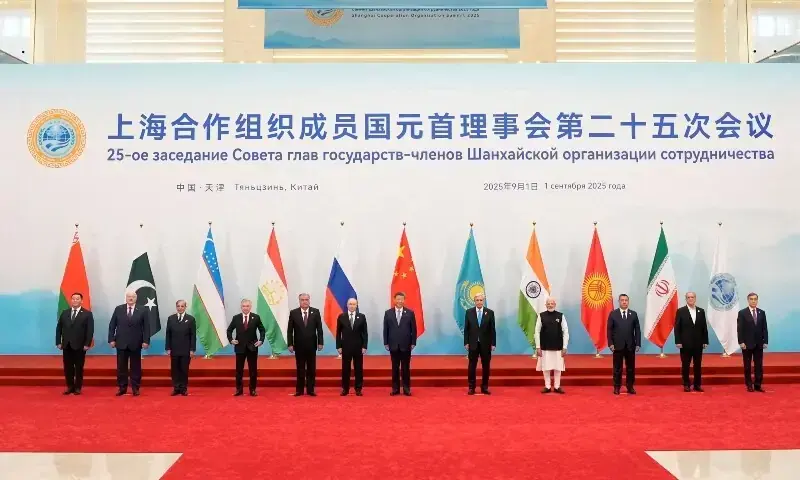
Pakistan’s decision to chair the 12th Meeting of the Heads of Border Services of the Shanghai Cooperation Organisation (SCO) comes at a time when border security has become one of Eurasia’s defining strategic concerns. Against a backdrop of terrorism, cross-border crime, regional instability and shifting geopolitical alliances, Islamabad’s leadership of the high-level meeting underscores its growing role within one of the world’s most influential regional organisations.
According to Pakistan’s Foreign Office, representatives from SCO member states reviewed the security situation along their shared borders, assessed emerging threats and approved the outcomes of the joint border operation “Solidarity-2025.” Delegates also endorsed preparations for “Solidarity-2026” while supporting Tajikistan’s proposal to host the exercise in 2027.
Beyond a Routine Security Meeting
Although the gathering may appear technical in nature, its significance extends well beyond border management. The SCO has increasingly evolved into a platform where member states coordinate responses to transnational security challenges, including terrorism, drug trafficking, organised crime and illegal migration. For countries sharing some of the world’s longest and most complex land borders, intelligence sharing and coordinated border operations have become strategic necessities rather than diplomatic formalities.
Pakistan’s chairmanship therefore highlights its position as an active stakeholder in shaping regional security discussions at a time when instability in parts of Afghanistan, tensions across the Middle East and evolving great-power competition continue to reshape Eurasia’s security landscape.
A Strategic Opportunity for Islamabad
For Pakistan, leading the meeting carries diplomatic significance beyond its immediate agenda. The country is preparing to assume the rotating chairmanship of the SCO Council of Heads of State later this year and is expected to host the leaders’ summit in 2027. Successfully steering specialised SCO forums helps reinforce Pakistan’s credentials as a responsible regional actor capable of facilitating multilateral cooperation.
It also provides Islamabad with an opportunity to deepen engagement with major regional powers, including China, Russia, Iran and the Central Asian republics, while advancing its long-standing emphasis on collective approaches to regional security.
Security Cooperation in an Uncertain Region
The participation of Iran’s border guard leadership also reflects the expanding scope of SCO cooperation. Tehran reiterated its interest in strengthening collaboration on border security, intelligence sharing, combating organised crime and countering narcotics trafficking—issues that affect nearly every SCO member state.
This growing emphasis on practical security cooperation demonstrates the SCO’s evolution from a confidence-building forum into a platform capable of coordinating operational responses to common regional threats.
Looking Ahead
As geopolitical competition intensifies across Eurasia, organisations such as the SCO are becoming increasingly important in managing shared security challenges. Pakistan’s leadership of the 12th Meeting of the Heads of Border Services reflects not only its strategic geography but also its expanding diplomatic role within the organisation.
While the meeting produced no headline-grabbing announcements, it reinforced an important reality: regional stability increasingly depends on sustained cooperation among neighbouring states. For Pakistan, chairing the forum is another step toward strengthening its influence within the SCO and positioning itself as a bridge between South Asia, Central Asia and the wider Eurasian region.