India could face one of its most challenging years in recent history as foreign policy, domestic politics and economic pressures increasingly converge, according to analysts. While New Delhi has projected itself as a rising global power over the past decade, experts argue that 2026 may test whether it can balance strategic ambitions abroad with mounting challenges at home.
Foreign Policy Under Pressure
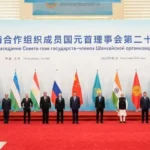
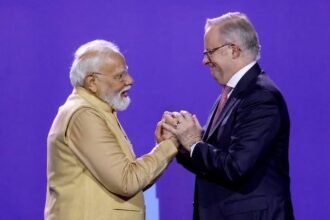
India’s carefully cultivated strategy of maintaining strong ties with competing global powers is facing growing strain. Relations with the United States have become more complicated amid difficult trade negotiations, while New Delhi continues to maintain strategic links with Russia and expand engagement with Europe and the Indo-Pacific. At the same time, tensions with China remain unresolved along the Himalayan border, and Pakistan continues to occupy an important place in India’s regional security calculations.
Analysts believe this increasingly complex geopolitical environment leaves India with less room for diplomatic manoeuvre. Decisions on trade, defence and energy are becoming closely linked to domestic economic performance, making foreign policy far more politically sensitive than before.
Economic Challenges Could Shape Politics
Although India remains one of the world’s fastest-growing major economies, economists warn that external risks are beginning to weigh on its outlook. Global trade uncertainty, supply chain disruptions, energy price volatility and slowing international demand could affect exports and investment.
Recent reports indicate that New Delhi has taken a tougher negotiating position in trade talks with Washington, reflecting greater confidence in its economic resilience and expanding partnerships with Europe, the Gulf and other markets. However, analysts caution that prolonged trade disputes or rising tariffs could still hurt key manufacturing and export sectors.
Domestic Politics Meets Global Reality
Prime Minister Narendra Modi’s government has built much of its political narrative around India’s growing international influence. However, analysts argue that diplomatic achievements alone may not satisfy voters if economic concerns such as inflation, unemployment and rural distress become more pronounced.
The intersection of foreign policy with domestic politics means that international developments—from global conflicts affecting energy prices to major trade negotiations—could have direct electoral consequences. This reduces the government’s ability to separate external challenges from domestic political debates.
A Critical Year Ahead
Rather than facing a single crisis, India appears to be entering a period where multiple pressures could reinforce one another. Success in 2026 will likely depend on New Delhi’s ability to manage geopolitical competition, sustain economic growth and address domestic expectations simultaneously.
For a country seeking a larger global role, the coming year may prove to be less about projecting power abroad and more about demonstrating resilience at home. Whether India can maintain its strategic autonomy while navigating an increasingly uncertain international environment will shape not only its regional influence but also its long-term economic and political trajectory.