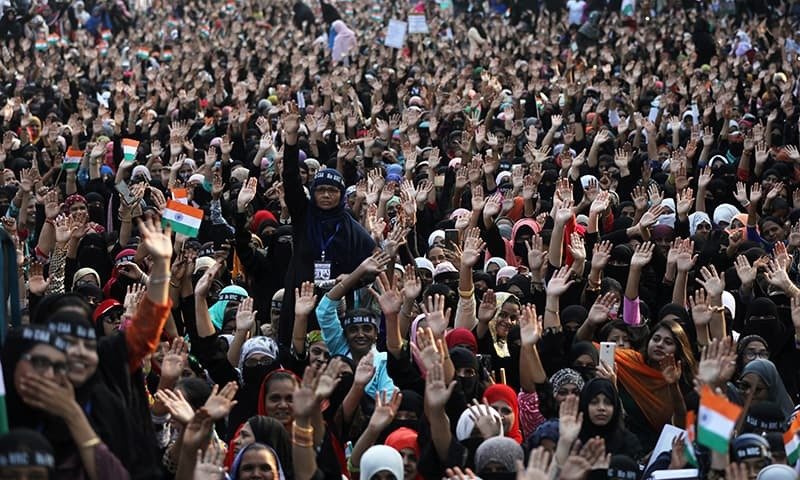
Across India this July, a wave of unrelated but simultaneous protests has turned campuses, farmlands, forests, and city outskirts into sites of confrontation between citizens and the state. From students demanding accountability for a broken exam system to villagers resisting bulldozers and multinational data centres, the demonstrations reveal a common thread: ordinary people pushing back against decisions made without their consent.
NEET Student Protests, Jantar Mantar, Delhi Since June 6, students and youth groups — led by the Cockroach Janta Party (CJP) under Abhijeet Dipke — have occupied Jantar Mantar demanding Education Minister Dharmendra Pradhan’s resignation over the NEET-UG paper leak and CBSE marking irregularities. Activist Sonam Wangchuk joined with an indefinite hunger strike in late June. Amnesty International has flagged excessive police force against the demonstrators, and reports of lathi charges, detentions, and tear gas have persisted through July, including during a “Sansad Chalo” (march to Parliament) attempt on July 20 that turned violent, with more than a dozen central Delhi metro stations shut in the days after.
On June 21, as the agitation entered its third day, Dipke publicly invited farmer unions to join the demonstration, explicitly citing past student solidarity with farmers’ movements. He announced that farmer groups had extended support and were expected to swell the crowd the following day, tying the two movements together in a broader show of solidarity at the protest site.
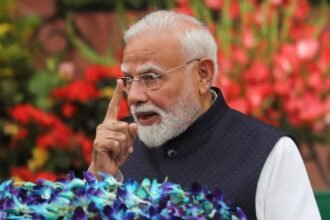
Four days after the July 20 crackdown, Prime Minister Narendra Modi broke his public silence, posting on X on July 23 that fast-track courts would be set up for swift punishment in paper-leak cases and that nothing mattered more than the welfare of India’s youth. Senior BJP figures quickly amplified the message: Delhi Chief Minister Rekha Gupta said safeguarding students’ futures remains the government’s top priority under Modi, MP Nishikant Dubey insisted no culprit would be spared, and MP Tejasvi Surya framed the government’s approach as centred on reform. None of them, however, addressed Pradhan’s resignation or the police action against protesters — and neither has Union Home Minister Amit Shah, under whose ministry the Delhi Police operates.
That silence was echoed at back-to-back press briefings. Defence Minister Rajnath Singh accused the opposition of using students as political tools to manufacture outrage, while BJP chief JP Nadda maintained the government had never dodged a debate and remained willing to discuss the issue in Parliament. BJP MP Bansuri Swaraj held a separate briefing accusing the CJP of spreading fake narratives — including claims about injuries and detentions she called fact-checked and false — while insisting the Centre remained open to dialogue and had already acted by ordering a CBI probe, forming a special investigation team, and arresting more than a dozen accused. The CJP and Congress leader Rahul Gandhi rejected Modi’s fast-track courts announcement as insufficient, reiterating their central demand for Pradhan’s resignation.
Save Shivalik Forest, Uttarakhand Residents, environmentalists, and the Uttarakhand Kranti Dal have protested the felling of over 4,300 trees for the Bhaniyawala–Rishikesh highway widening, warning of damage to an elephant corridor near Rajaji National Park. Evoking the historic Chipko movement, protesters have hugged trees and staged black-clad “Harela” demonstrations; authorities have since paused felling pending further review.
Karnataka AI Township Land Acquisition, Bidadi Farmers under the Raithara Bhoohitha Rakshana Sangha have resisted acquisition of roughly 9,600 acres near Bengaluru for the Greater Bengaluru Integrated Township, billed as India’s first AI-powered city. The protest, running over a year, saw women farmers chase away survey teams with brooms before the government pushed ahead with formal notifications in June.
Punjab Farmers’ Trade Protest Farmer unions under the Desh Bachao Morcha banner have staged motorcycle rallies and a “Kisan Mahapanchayat” march toward Delhi opposing a proposed India-US trade deal, fearing cheaper subsidized American agricultural and dairy imports will devastate small farmers. Marchers were briefly blocked at the Shambhu border before a partial agreement with Haryana’s government led to a pause.
Karapur-Sarvan Mega Project Protest, Goa In Karapur-Sarvan, a village near Panaji, residents have been protesting since early April against a proposed mega housing project, citing threats to water and power supply, farmland, and landslide risk, and alleging the land — belonging to the local communidade — was sold off without proper consent. The agitation, organised under the “Save Karapur” banner, crossed 100 days in mid-July, prompting a solidarity demonstration at Delhi’s Jantar Mantar alongside a parallel rally at Panaji’s Azad Maidan. Protesters detained on Goa Revolution Day drew sharp criticism from opposition leaders, who accused the state government of intimidation tactics.
Amazon Data Centre Protest, Thane Residents under “Wake Up Thanekar” have opposed Amazon’s planned 422 MW data centre in a densely populated Thane neighborhood, citing water and power strain and noise pollution — part of a broader pattern of resistance to Google’s and Microsoft’s Indian data centre projects.
Manipur Protest Manipur remains tense amid prolonged ethnic unrest between Meitei and Kuki-Zo communities, with displacement, sporadic violence, and demands for lasting peace and rehabilitation still unresolved years after the conflict first erupted.
Gujarat Farmer Protest, Chhattisgarh Demolitions, and the Ken-Betwa Link Dispute Farmers in parts of Gujarat continue localized agitations over land acquisition and irrigation issues, while in Chhattisgarh, tribal and rural communities have resisted demolition drives linked to mining and infrastructure expansion. A separate, long-running flashpoint is the Ken-Betwa river-linking project spanning Madhya Pradesh and Uttar Pradesh, which has drawn opposition over submergence of forest land inside the Panna Tiger Reserve and the displacement of villages — echoing the land and forest-rights battles playing out nationwide.
A Common Pattern What unites these movements is a demand for consultation before disruption — whether it’s a student’s exam, a farmer’s field, a village’s land, or a forest’s canopy. The state’s response, marked by barricades, detentions, and force from Delhi to Goa, has only sharpened the sense of urgency among protesters nationwide.