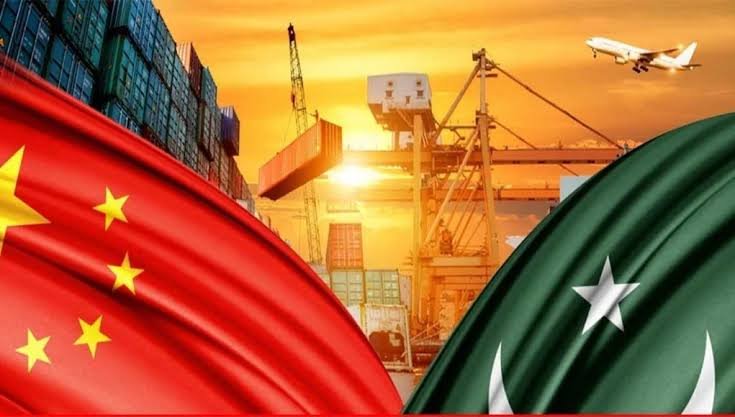
As China’s Belt and Road Initiative (BRI) enters a new phase, the focus is shifting from rapid infrastructure expansion to sustainable economic transformation. The next chapter of the initiative emphasises resilient supply chains, industrial upgrading, green development and long-term regional integration. For Pakistan, preparing for CPEC 2.0, China’s northeastern Jilin Province offers an important example of how connectivity can be translated into broad-based economic growth.
Once known primarily as an industrial base, Jilin has successfully diversified its economy by combining manufacturing, logistics, tourism and renewable energy under the broader BRI framework. The province’s experience demonstrates that modern infrastructure alone is not enough—economic corridors deliver lasting benefits only when they are linked to local industries, innovation and services.
Jilin’s economy has continued to expand steadily. In the first quarter of 2026, the province recorded a GDP of 334.74 billion yuan, growing 4.5 per cent year-on-year. More importantly, the structure of its economy has evolved, with the services sector contributing more than 70 per cent of overall growth. Tourism, retail and hospitality have flourished, driven by Jilin’s internationally recognised winter sports and cultural attractions, creating new sources of employment and investment.
The province has also become a key logistics hub within Northeast Asia. Freight rail links connect Jilin’s industrial centres with European markets, enabling exports ranging from automotive products to agricultural goods. Supporting this network is a combination of modern rail infrastructure, an expanded international airport and efficient inland logistics facilities that have transformed Changchun into a major transport gateway.
Another notable success is the Hunchun Border Rail Port, where streamlined customs procedures and high-capacity freight handling have strengthened cross-border trade. Jilin has also benefited from close cooperation with coastal provinces, particularly through partnerships with Ningbo Zhoushan Port, allowing inland industries to access global shipping networks more efficiently.
Perhaps the most striking example of strategic planning is China’s agreement with Russia allowing Jilin to use Vladivostok as a transit port for domestic cargo. The arrangement effectively gives the landlocked province access to the sea, reducing transport costs and enhancing export competitiveness. It illustrates how diplomacy, infrastructure and economic policy can work together to reshape regional trade.
For Pakistan, these developments offer valuable lessons as CPEC enters its second phase. Gwadar Port has the potential to become far more than a maritime gateway if it is integrated with efficient rail links, inland logistics hubs and industrial zones across the country. Strengthening connections between Gwadar, Karachi and major production centres could significantly improve trade efficiency while attracting new investment.
Similarly, provinces such as Balochistan can benefit by developing industries linked to local resources, tourism and renewable energy rather than relying solely on transit revenues. Jilin’s experience shows that economic corridors generate the greatest returns when they support local businesses, create jobs and encourage technological upgrading.
As China redefines the BRI for a more complex global economy, Jilin stands out as a successful model of regional revitalisation. For Pakistan, the province’s transformation highlights that the true promise of CPEC 2.0 lies not only in building roads and ports, but in creating diversified, innovation-driven economies capable of delivering sustainable long-term growth.