The twenty-first century’s geopolitical competition is no longer defined solely by oil and natural gas. Instead, the race for critical minerals—such as lithium, copper, cobalt, nickel, graphite, and rare earth elements (REEs)—has emerged as the new frontier of global power. These resources are indispensable for electric vehicles, renewable energy systems, semiconductors, advanced defense technologies, and artificial intelligence infrastructure. As countries transition toward cleaner energy and digital economies, control over critical mineral supply chains is becoming a central strategic imperative.
Today, China processes and refines a dominant share of the world’s critical minerals, while the United States, the European Union, Japan, and India are racing to diversify their supply chains. Western powers and global financial institutions are committing billions in capital to secure mineral access, recognizing that resource security is now inseparable from national security.
For Pakistan, this global realpolitik presents a historic economic window. Official estimates place the country’s in-situ mineral potential at roughly $6 to $8 trillion, yet the sector currently contributes only about 1% to national GDP. The country possesses vast untapped deposits, particularly across Balochistan, Khyber Pakhtunkhwa, and Gilgit-Baltistan.
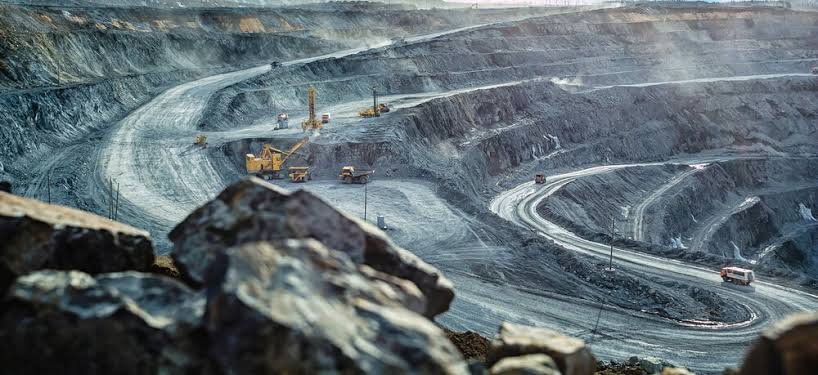
The flagship Reko Diq project in Balochistan’s Chagai district—a $5.5 billion-plus joint venture with Barrick Gold aiming for first production by 2028—stands as one of the world’s largest undeveloped copper-gold deposits, projected to generate over $70 billion in long-term cash flow. Beyond Reko Diq, Pakistan hosts significant unexploited reserves of chromite, antimony, lithium-bearing pegmatites, and substantial REE occurrences along the Tethyan belt.
Pakistan’s geographic position further amplifies its strategic weight. Positioned at the intersection of South Asia, Central Asia, and the Middle East, the nation can evolve into a regional hub for extraction, processing, and transit. Through the China-Pakistan Economic Corridor (CPEC) and Gwadar Port—complemented by recent initiatives like the Special Investment Facilitation Council (SIFC) to fast-track foreign direct investment—Pakistan is uniquely situated to attract multi-vector capital, drawing interest from Western mining conglomerates, Gulf sovereign funds like Saudi Arabia’s Manara Minerals, and Chinese industrial firms.
However, mineral abundance alone does not guarantee prosperity. History is replete with resource-rich nations trapped by corruption, environmental devastation, and political instability. Pakistan must actively avoid the “resource curse” by establishing transparent regulatory frameworks, building domestic refining capacity, and pursuing high-value processing rather than merely exporting raw ores.
Equally vital is ensuring localized economic benefits and environmental compliance. Mining operations must directly fund local infrastructure, healthcare, education, and employment in host regions to maintain a sustainable social license to operate.
As global power dynamics become increasingly linked to critical mineral supply chains, Pakistan stands at a decisive crossroads. Managed strategically, its geological assets can evolve from untapped potential into a catalyst for industrialization, export growth, energy security, and lasting geopolitical influence.