The Indus ReportThe Indus ReportThe Indus Report
Notification Show More
Font ResizerAa
  • Home
  • News
    • Pakistan
    • India
    • Middle East
    • America
    • Europe
  • Opinion
    • Analyses
    • Reviews
  • Economy and Business
    • Market Reports
    • Jobs
    • Inflation
    • Human Development Indicators
  • Tech
    • AI
    • ⁠Innovation
    • ⁠Industry
  • Lifestyle
    • Culture
    • Entertainment
    • ⁠Celebrity
  • Privacy Policy
  • About Us
  • Contact us
Font ResizerAa
The Indus ReportThe Indus Report
  • My Saves
  • My Interests
  • My Feed
  • History
Search
  • Home
  • News
    • Pakistan
    • India
    • Middle East
    • America
    • Europe
  • Opinion
    • Analyses
    • Reviews
  • Economy and Business
    • Market Reports
    • Jobs
    • Inflation
    • Human Development Indicators
  • Tech
    • AI
    • ⁠Innovation
    • ⁠Industry
  • Lifestyle
    • Culture
    • Entertainment
    • ⁠Celebrity
  • Privacy Policy
  • About Us
  • Contact us
Have an existing account? Sign In
Follow US
© 2026 THE INDUS REPORT Network. All Rights Reserved.

Home - Blog - Latest - News - India - The Structural Marginalization of Muslims in India

India

The Structural Marginalization of Muslims in India

Bilal Akram
Last updated: July 7, 2026 5:40 am
Bilal Akram
Share
images2
SHARE

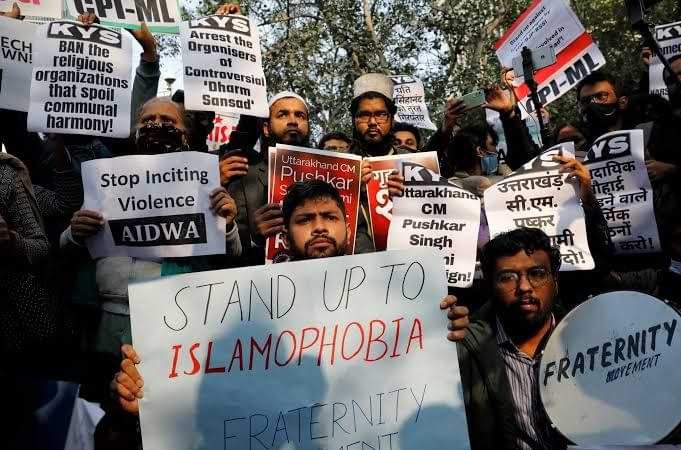
Scholars of political science and sociology have long been engaged in the debate regarding how minorities fit into nation-states, and one contemporary example that illustrates the dilemma is that of Muslims in India, specifically post-2014. The theoretical terms that would help explain this change are otherization and denationalization.

Key to the analytical framework is the claim that the marginalization of Muslims in India today is an artificial project rather than an inherent product of cultural differences. In other words, otherisation is a strategy that uses economic, historical, and political means in order to construct a group as one that is entirely distinct from the national body. The notion of denationalization takes this concept even further by defining citizenship as a contested or even revoked right for a certain target audience. The strength of the analytical framework in question lies in the fact that it does not assume a unified identity of Muslims in India but recognizes that the same project is executed in various regions depending on their specific conditions, for instance, disenfranchising Bengali speakers in Assam, criminalizing religion in Uttar Pradesh, or conducting political audits through the Special Intensive Revision in West Bengal.

Some examples of such policy measures include the Citizenship Amendment Act alongside the National Register of Citizens, which helps in creating a framework where religion decides the ease or difficulty with which one’s allegiance can be proved. The use of laws like the Unlawful Activities (Prevention) Act in a selective manner is another example of the way that seemingly neutral legal processes can be used selectively. The case of Bilkis Bano is quite significant in this context in the sense that it goes beyond legislation to explore how inaction on part of the state, the failure to challenge the acquittal, becomes a denationalization process.

Just as noteworthy is the manner in which these studies highlight the psychological and sociological aspects of this dynamic, especially the demands placed on Muslim politicians to publicly disavow the claims of their community as a prerequisite for entry into the political system. This aspect of marginalization, described at times as internalized othering, indicates that marginalization is not just a function of state force, but even of the structure of participation within the political sphere. When minority elites have to publicly reject their own communities as a means of gaining entrance into political systems, integration becomes hard to distinguish from co-optation.

It should be noted that this analysis constitutes an academic reading in a wider debate surrounding minority rights, secularism, and majoritarian politics in India, a debate in which different academics and policymakers provide alternative readings of such policies. However, this analytical framework provides a thorough method through which the convergence of legal, electoral, and rhetorical tools could alter the contours of national identity, regardless of any judgment about intentions or consequences.

Share This Article
Email Copy Link Print
Previous Article c50bef30 95ce 11ef 9eb7 7b7defb4f9e7.jpg The 1984 Sikh Genocide: Memory, Testimony, and a Search for Justice That Won’t End
Next Article 9aa22f20 792f 11f1 b976 0b9c15b0ccfc.jpg The Diplomacy of Mourning: What Khamenei’s Funeral Really Signalled
Leave a Comment

Leave a Reply Cancel reply

Your email address will not be published. Required fields are marked *

Your Trusted Source for Accurate and Timely Updates!

Our commitment to accuracy, impartiality, and delivering breaking news as it happens has earned us the trust of a vast audience. Stay ahead with real-time updates on the latest events, trends.
FacebookLike
XFollow
InstagramFollow

You Might Also Like

The India-US Trade Deal: Tariffs and Domestic Response
IndiaInflationNews

The India-US Trade Deal: Tariffs and Domestic Response

By
TheIndusReport
Strategic Fissures: Why the Indian Armed Forces are Struggling?
IndiaAnalyses

Strategic Fissures: Why the Indian Armed Forces are Struggling?

By
Hajra Asad
Anatomy of Deceit: Forensic Dive into India’s “False Flag” Provocations
India

Anatomy of Deceit: Forensic Dive into India’s “False Flag” Provocations

By
Hajra Asad
The Indian Connection: Unmasking the Fake Iranian Network Targeting Pakistan
IndiaMiddle East

The Indian Connection: Unmasking the Fake Iranian Network Targeting Pakistan

By
TheIndusReport
The Indus Report
Facebook Twitter Instagram

The Indus Report delivers global news, entertainment, viral trends, and fashion updates with accuracy, clarity, and a modern digital perspective.

Top Categories
  • Economy and Business
  • Lifestyle
  • News
  • Opinion
  • Tech
Support & Terms
  • About Us
  • Contact us
  • Privacy Policy
  • Terms and Conditions
  • Editorial Policy
  • Write For Us
  • Authors

©2026 THE INDUS REPORT Network. All Rights Reserved.

2026 The Indus Report Network. All Rights Reserved.
Welcome Back!

Sign in to your account

Username or Email Address
Password

Lost your password?