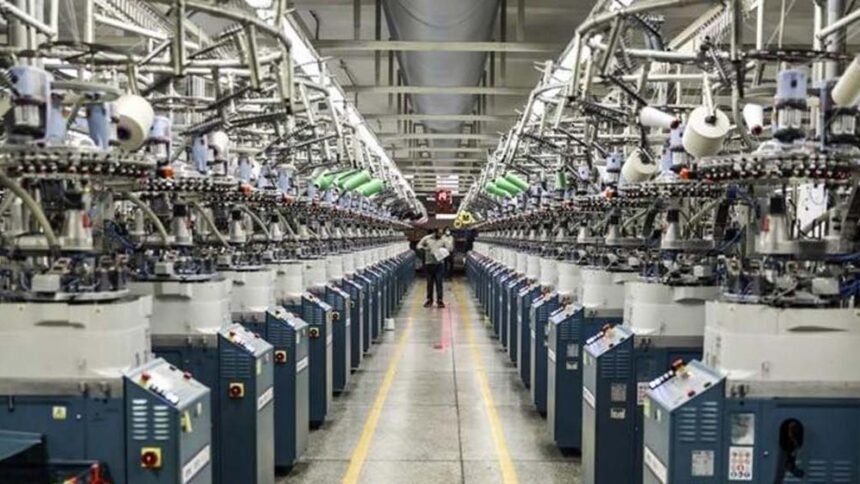
Pakistan’s textile and garment industry sits at the heart of the country’s economic identity. It contributes around 8.5 per cent of GDP, supports millions of livelihoods and accounts for more than 60 per cent of national export earnings. From Faisalabad and Karachi to Lahore and Sialkot, Pakistani factories produce clothing, denim, hosiery, home textiles and sportswear for markets across Europe and North America.
This global footprint, however, brings both opportunity and scrutiny. International organisations have raised concerns over wages, excessive overtime, workplace safety, grievance mechanisms and the limitations of conventional social audits. Such concerns should neither be dismissed nor allowed to define the entire industry.
The reality is more nuanced. The ILO Better Work Pakistan Synthesis Report for 2022–2025 found that among factories assessed in 2025, only 4.6 per cent were non-compliant with minimum-wage requirements and 2.3 per cent with overtime-payment requirements. Compliance gaps remain, particularly across contractors, subcontractors and smaller production units, but these findings do not suggest that labour violations define Pakistan’s textile sector.
At the same time, major exporters are investing in worker welfare, inclusion, environmental sustainability and supply-chain governance. Interloop has expanded women’s representation in leadership, provided scholarships and introduced mobile health services. Gul Ahmed has established policies covering forced and child labour, discrimination and harassment, alongside grievance and whistleblowing mechanisms. Soorty, Sapphire, Masood Textile Mills and others have similarly invested in inclusion, occupational safety, healthcare, education and environmental management.
The challenge is that these efforts remain fragmented. Pakistan lacks a credible, locally owned mechanism for measuring, comparing and communicating the performance of its textile industry. One possible solution is a Pakistan Textile 100 Index — an independently governed annual assessment of leading textile companies. The index could evaluate five areas: financial and export performance, labour and human-resource practices, environmental sustainability, corporate governance, and compliance with international due-diligence and GSP+ requirements. Its value would extend beyond rankings. Companies would be assessed against measurable indicators such as wages, working hours, workplace safety, worker representation, emissions, water consumption, chemical management and supply-chain oversight. Independent verification and worker engagement could make the results more credible than conventional self-reported audits.
The index could also become a commercial asset. Strong performers could use independently verified results in international tenders, buyer negotiations, ESG disclosures, trade missions and sustainability-linked financing. Most importantly, it could change Pakistan’s external narrative. Instead of responding to criticism through isolated corporate statements, the industry could present transparent, comparable evidence of where it stands — and where it needs to improve.
Pakistan’s textile sector does not need to claim perfection. It needs a credible system that measures progress, exposes weaknesses and rewards improvement. The next step should not simply be producing more textiles. It should be building a textile industry whose standards are as recognisable globally as its products.