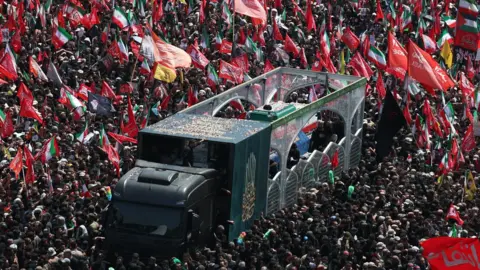
Iran’s state funeral for its assassinated Supreme Leader, Ali Khamenei — killed on 28 February in a joint US-Israeli strike on his Tehran residence at the start of the 2026 Iran war — has evolved into far more than a national mourning ceremony. The funeral was originally scheduled for March but was postponed as the war dragged on, meaning the week-long observances stretching from Tehran to Qom, Najaf, Karbala and culminating with his burial in Mashhad on 9 July arrive nearly four months after his death. That gap has become part of the story: a demonstration of diplomatic alignment, regional influence and political messaging at a pivotal moment for the Middle East.
While Iranian authorities expect one of the largest public funerals in the country’s history, the event’s geopolitical significance lies not only in the millions of mourners but in who chose to stand with Tehran—and at what level. Leaders and senior officials from across Asia and the wider region have travelled to Iran, while most Western nations remain absent. Pakistan’s Prime Minister Shehbaz Sharif is among the heads of government attending, alongside delegations from countries including Russia, China and several regional partners.
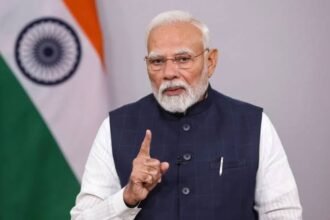
India’s decision has drawn particular attention. Although Iranian President Masoud Pezeshkian invited Prime Minister Narendra Modi personally, New Delhi opted to send Minister of State for External Affairs Pabitra Margherita and Bihar Governor Syed Ata Hasnain instead. India has described the delegation as reflecting its longstanding civilisational and strategic ties with Iran, yet the contrast in representation has inevitably been interpreted through a geopolitical lens.
For Pakistan, attendance reinforces a position Islamabad has maintained since the assassination. Pakistan condemned the February strikes, continued engagement with Washington during subsequent diplomacy, and has been widely credited with helping facilitate de-escalation between Iran and the United States. The prime minister’s presence in Tehran therefore reflects continuity rather than a policy shift.
Inside Iran, the funeral is also serving another purpose: projecting resilience after months of conflict. Massive crowds, senior political and military leaders, and carefully choreographed ceremonies are intended to signal that the Islamic Republic remains cohesive despite the loss of its most powerful figure.
In diplomacy, symbolism often carries as much weight as formal policy. Khamenei’s funeral has become a ledger of international relationships, revealing which governments chose to stand beside Iran at one of the defining moments in its modern history—and how they chose to do so.